
Treasure: Hidden, Lost, Found
Some photographs and some words....

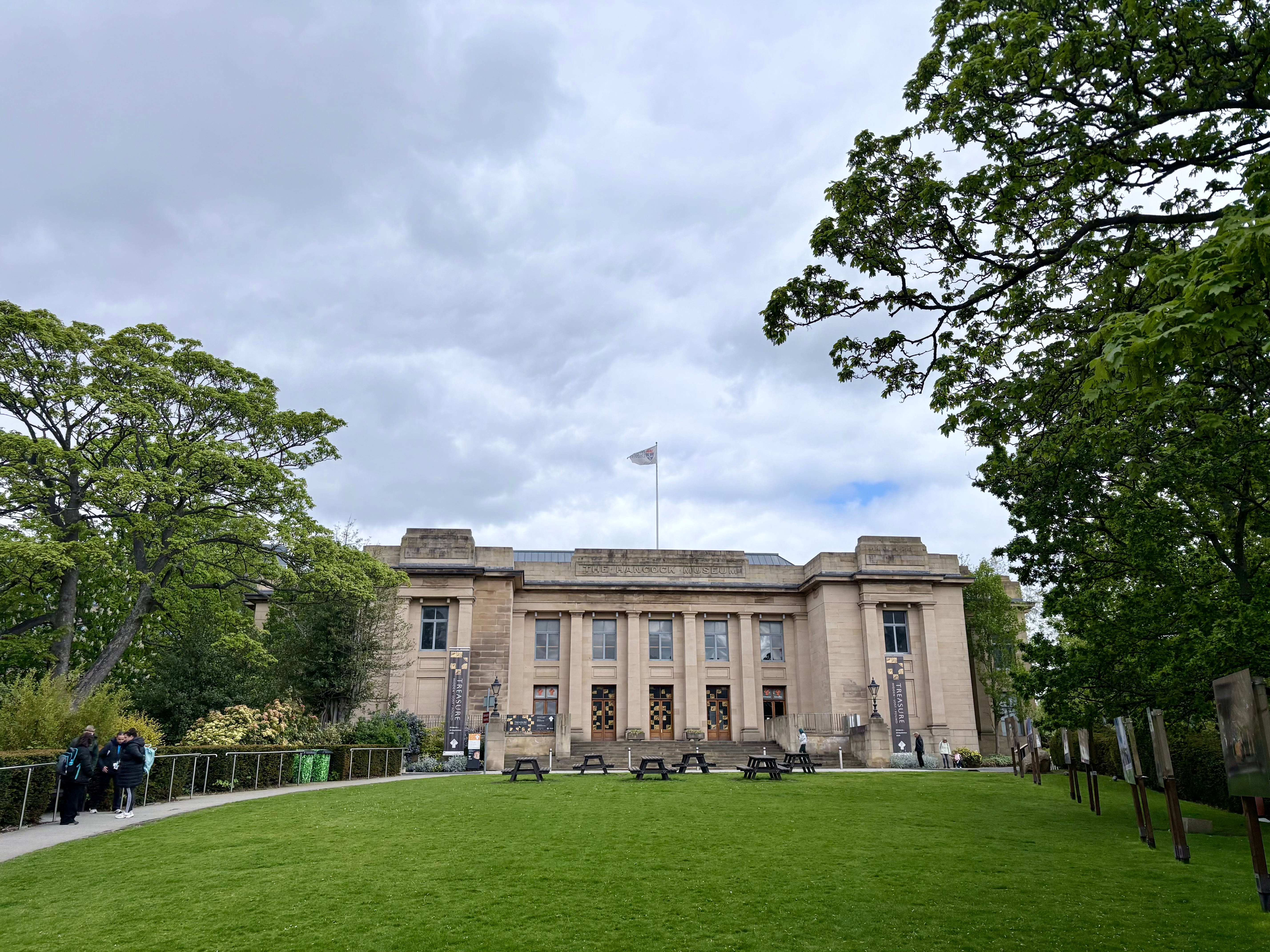
We are delighted to unite these incredible archaeological finds from across the North for our latest exhibition. From Roman silver discovered along Hadrian’s Wall to 9th-century gold found by a Newcastle University student, this is a rare opportunity to see these scattered treasures displayed alongside one another. We can’t wait for people to experience the thrill of these finds and the fascinating stories they reveal about our shared past.
Malavika Anderson, Museum Manager at the Great North Museum: Hancock
This week’s Meander is of my recent visit to the ‘Treasure: Hidden, Lost, Found’ exhibition that’s running at Newcastle’s Great North Museum: Hancock, but before looking at the exhibition, let’s take a look at what at first glance seems the museum’s strange name.
When I was young, the museum was known simply as the Hancock Museum, named after the Victorian naturalist brothers John and Albany Hancock, who were among the most important scientific figures in 19th-century Newcastle, helping turn Tyneside into a serious centre for natural history, zoology, and scientific collecting.
Most regard John, a naturalist, ornithologist, taxidermist, collector and illustrator as the principal ‘Hancock’, who became famous for transforming taxidermy from stiff specimen display into something far more lifelike and artistic. Before John, the arrangement of stuffed animals was very ‘mechanical’ while he pioneered displays that showed birds and animals in natural poses and within realistic habitats. An ideal central to John’s work was that museums should educate, inspire curiosity, and make science accessible to everyone. Many see those ideals as having a huge influence on Victorian museum design and wildlife presentation, and indeed helped shape how museums work today, with some holding John up as “the father of modern taxidermy.”
Of course, taxidermy today occupies a complicated space, neither universally condemned nor universally accepted, with attitudes depending heavily on how the animals were obtained, why the taxidermy was created, and where it is displayed.
Public reactions to taxidermy vary widely, with some visitors finding it valuable for education, conservation and scientific study, while others view it as eerie and exploitative, prompting strong ethical criticism centred on animal welfare. That tension has become part of modern museum interpretation, with many museums, such as the Great Northern, now actively encouraging visitors to think critically about humanity’s relationship with animals and nature rather than presenting specimens in a neutral manner.
Victorian museums often reflected an attitude towards animals as specimens or curiosities, grounded in the idea that humans had dominion over nature, whereas today many people instead emphasise ecological responsibility and respect for animal life. As a result, rows of mounted animals can feel unsettling or sad to some visitors, rather than educational or inspiring.
However, museums still use historic specimens for zoological research, DNA analysis, extinction studies, and environmental history. A 19th-century bird specimen, for example, can help scientists study species decline, the effects of pollution and climate change, and genetic variation. Also, many museums argue that taxidermy helps visitors connect emotionally with wildlife in ways photographs sometimes cannot. Seeing a life-sized animal up close can inspire interest in conservation and preserve knowledge of extinct or endangered species.
Museums today are usually much more careful about ethical sourcing and conservation messaging, and modern institutions do not kill animals for display; specimens come from animals that died naturally in wildlife parks or conservation programmes.
Overall, the debate around taxidermy highlights a cultural shift from collecting nature to possessing and classifying it, to conserving nature with a focus on biodiversity loss, extinction, and environmental responsibility.
Albany, John’s older brother, was a distinguished scientist in a different, less controversial field, specialising in marine biology, microscopic organisms, molluscs, and other sea creatures. He became internationally respected for detailed scientific studies of nudibranchs (sea slugs) and other marine invertebrates. Where John was more public-facing and artistic, Albany was known for his painstaking observation, scientific illustration and anatomical precision. Together, the brothers represented two sides of Victorian science. Public education and spectacle with rigorous research and classification.
There was a deep tie between the Hancock brothers and Newcastle’s scientific community, especially the Natural History Society of Northumbria and the New Museum of Natural History, as it was first called, which opened in 1884 after John Hancock donated his collections and funds toward a purpose-built museum for the city. The museum soon became a symbol of Victorian civic pride, a major centre for natural history, and an educational institution. It was renamed The Hancock Museum in 1890, following John’s death that same year.
The museum maintained its focus on natural history until the end of the 20th century, but in 2003, a redesign and restoration of the Hancock building began, bringing together the collections of the Hancock Museum, Newcastle’s Museum of Antiquities, and Newcastle University’s Shefton Museum. This transition would turn the Hancock Museum from a natural history collection into one that offered natural history, archaeology, an understanding of ancient civilisations, geology, and, importantly, the regional history of northeast England. In 2009, the Great North Museum: Hancock opened its doors.
So, to the exhibition ‘Treasure: Hidden, Lost, Found,’ one of the museum’s major archaeology exhibitions for 2026, which brings together spectacular objects from across Northern Britain to explore not just what treasure is, but why people value and hide or dispose of objects over time. The exhibition also taps into larger debates in archaeology and museums about how objects are classified as ‘treasure’ under the law. Who has the right to own or display historical finds, and the relationships among detectorists, archaeologists, and museums.
At one level, the exhibition is full of visually striking artefacts such as Bronze Age objects, Roman jewellery, Anglo-Saxon gold and Tudor coin hoards, but goes beyond simply displaying precious items by asking questions such as why bury these things and who did so? What turns an old object into ‘treasure’, and who owns the past once something is rediscovered?
That broader approach makes the exhibition feel less like a conventional ‘treasures room’ and more like an exploration of how archaeology connects emotion, history, and identity. The exhibition is also designed to be immersive and family-friendly rather than purely academic, with interactive displays, themes of discovery and excavation, and family trails and activities.
The strongest aspect of Treasure: Hidden, Lost, Found is that it treats treasure not merely as wealth but as evidence of human fear and survival, including ritual or protective acts and the changing cultural meaning of objects. People often temporarily buried things in the ground to keep them safe (think Samuel Pepys and his cheese during the Great Fire of London), but in some cases, items were deposited in the earth or even in water with no intention of ever retrieving them. Of course, sometimes valuables might just have been lost.
A buried coin hoard might once have represented emergency savings during war, a religious offering after grief or loss, or even stolen booty hidden for later retrieval. A number of Bronze Age swords have been found in watery places, like the River Tyne. Many of these were deliberately thrown into the waters as offerings to the gods, with, at the time, rivers, lakes and boggy ground probably seen as places where you might enter the god’s realm. The Amble Rapier, for example, was found on the beach at Amble in Northumberland after a storm.
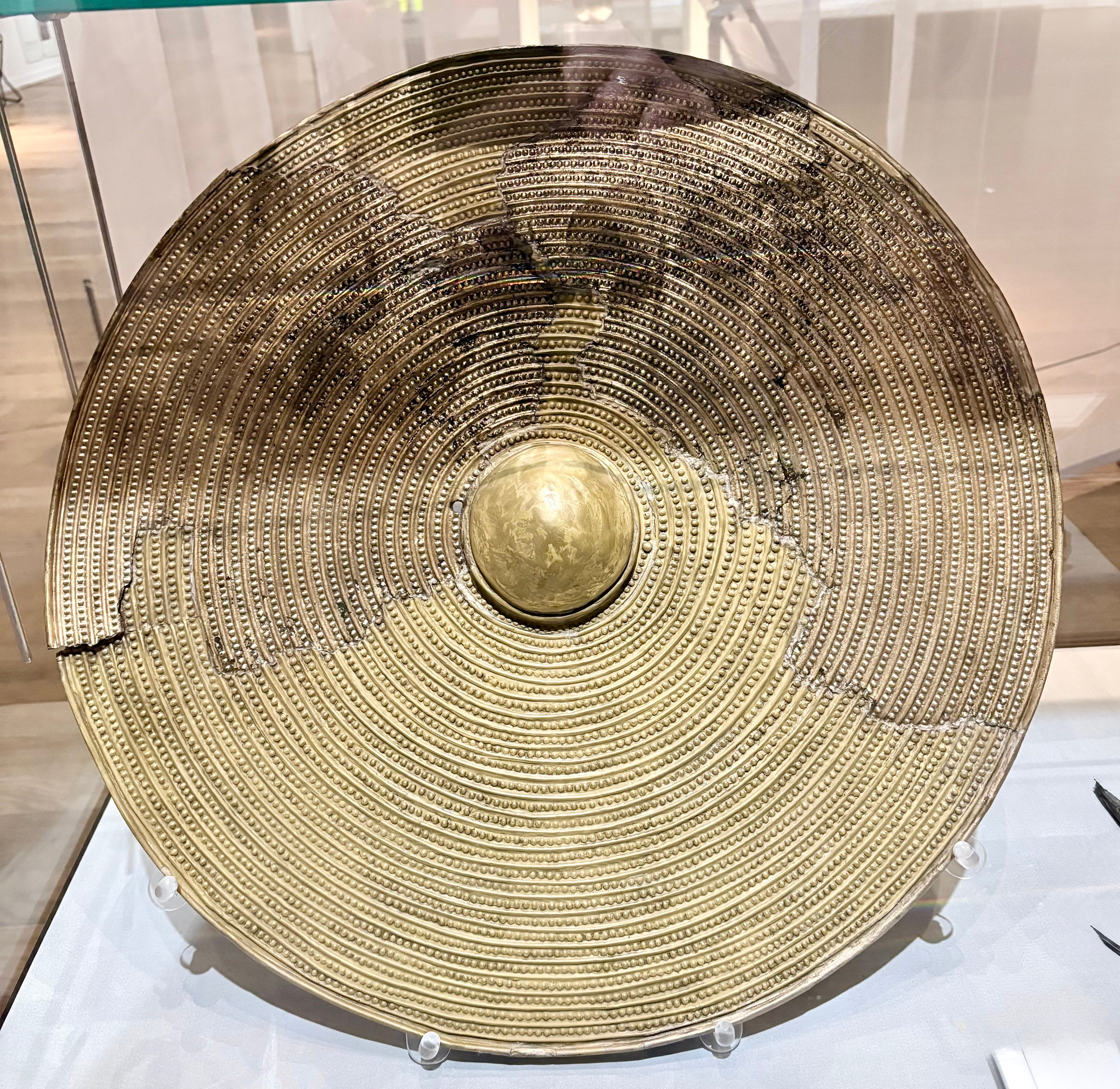
One of the exhibition’s standout objects for me is the Tribley Shield, a Bronze Age shield discovered near Chester-le-Street. Its story is almost as fascinating as the object itself and it is a perfect symbol for the exhibition’s central themes. Having survived being buried underground for thousands of years, it was rediscovered in the 18th century and broken into pieces so the bronze could be shared among friends; however, two surviving sections have now been reunited. It reminds us of how ‘discoverers’ perceived the value of what they discovered and how recognition of value, from pure financial to historical, has evolved.
Many treasures have a strong connection to their original owners; for example, the Aemilia Ring and the Ord Cross bear names of individuals, while the finds from a burial at Kirkhaugh, a village in Northumberland, also tell someone’s story. The finds, including a ‘cushion stone’ used to work metals, gold lock rings, and flint tools, are understood to be the personal effects of a craftsperson prospecting for metals in the North Pennines.
Given its proximity to Hadrian’s Wall, it’s also no surprise that the exhibition includes finds from Roman Britain and the frontier world around the wall. These include Roman jewellery hoards, coins, and objects associated with military life in the North. One notable find is the Birnie coin hoard, discovered in Scotland, which helps illuminate relationships between Rome and peoples living north of Hadrian’s Wall.
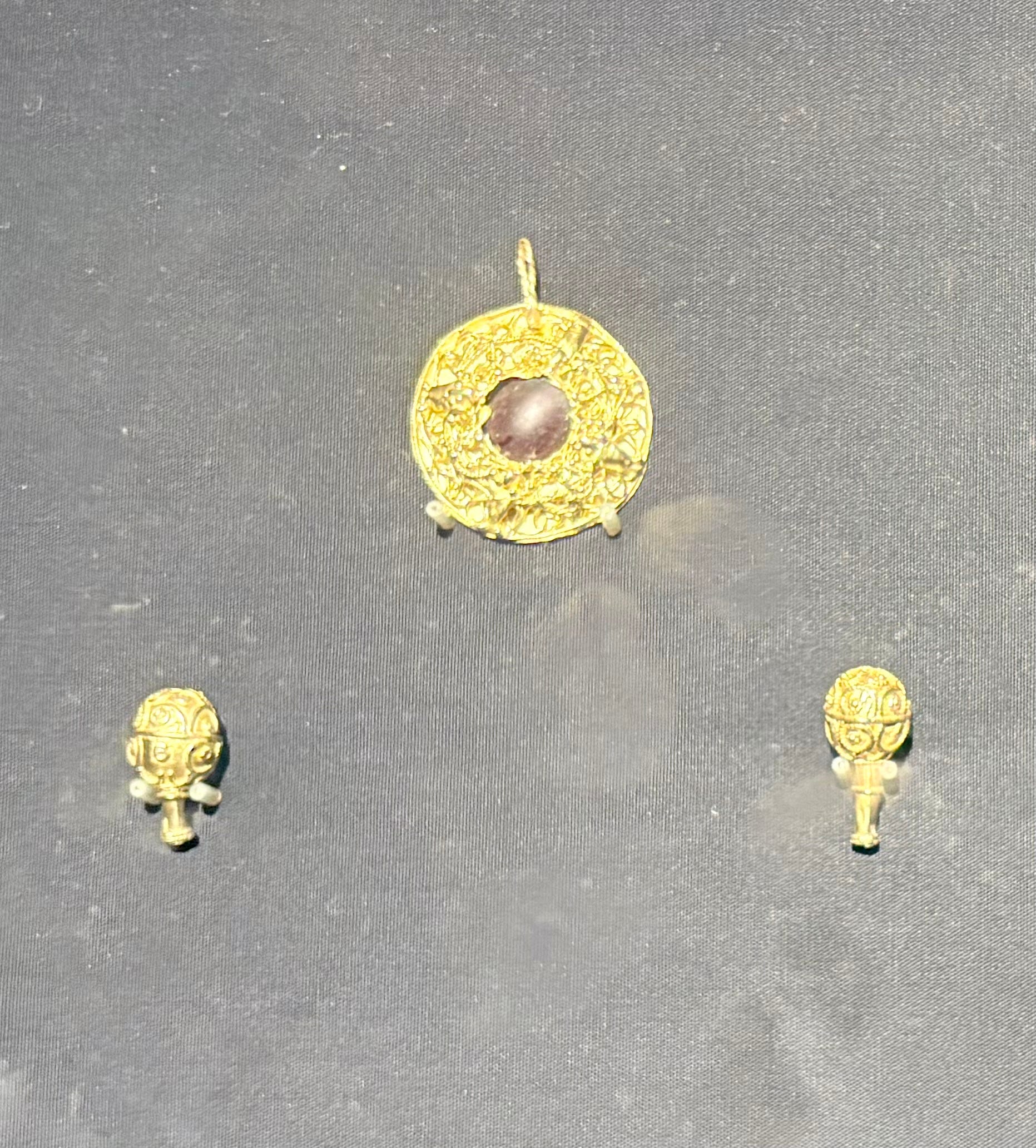
One particularly compelling inclusion is the West Woodburn Hoard, a set of rare early medieval gold artefacts discovered during an excavation in 2025.
In 2021, metal detectorist Alan Grey discovered two gold objects in Redesdale, Northumberland: a socketed mount (probably the head of a decorative pin) and a brooch. These highly decorative objects dated from the 9th century CE, and this discovery prompted archaeologists from the Northeast Museums and Newcastle University to organise an excavation in the same location.
On the first day, Yara Souza, a Newcastle University archaeology student from Orlando, Florida, uncovered a gold socketed mount, similar to the one already found. Alan, who was supporting the excavators, had used his metal detector to initially identify the location of the object, leaving it to Yara to carefully remove it from the earth, who later offered, “I couldn’t believe I’d found something so quickly in my first ever excavation, it was amazing to discover something that hasn’t been seen for more than a thousand years.”
The site where these objects were found lies near Dere Street, an important Roman road that remained in use long after the Roman Empire’s demise and eventually became part of the modern-day A68. Gold was high-status and used only by the elite. As Dere Street connected two major religious centres at Jedburgh and Hexham, experts think the two objects could have had a religious or ceremonial use.
Another treasure on display illustrates different attitudes towards ownership. Elements of the Capheaton Hoard were melted down so that the precious metals could be reused, while the rest became the property of the antiquarian Richard Payne Knight, who bequeathed it to the British Museum. Similarly, the Corbridge Lanx was part of a larger hoard, most of which was melted down and sold to a local goldsmith. However, it was declared a treasure trove and passed into the hands of the Dukes of Northumberland, who eventually sold it to the British Museum in the 1990s.
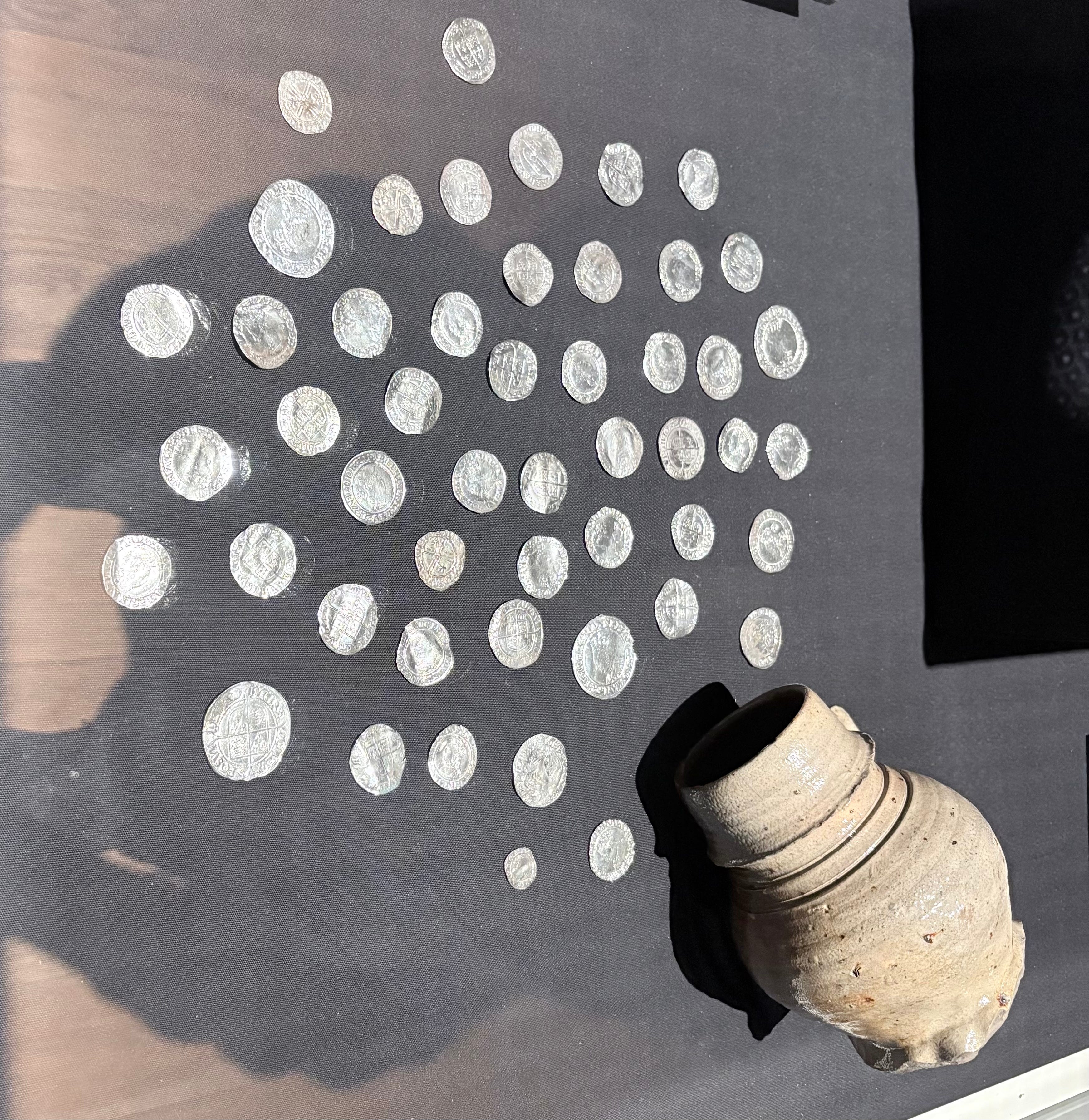
Some of the finds are from a later period, such as the Tudor period, ‘Mason’ and ‘Short’ Hoards found by individuals going about their daily lives, which show how treasure can be found by chance.
Richard Mason found a jug while renovating a house on the island of Lindisfarne in 2003, but it was not until 2011, when he was cleaning it, that he realised it contained 17 gold and silver coins, including a rare gold scudo of Pope Clement VII. The latest coin in the hoard is a silver penny of Elizabeth I from 1562, indicating that the hoard was hidden after that time. Coincidentally, in 1963, Alan Short found a hoard of 50 silver coins in almost the same spot on Lindisfarne and these coins also date from the reign of Elizabeth I, a time when Lindisfarne was a garrison on the frontier with Scotland, and both hoards might represent valuables buried for safekeeping by soldiers.
The ‘Birnie’ and ‘Dairsie’ Hoards of Roman silver from Scotland illuminate the complicated politics of Rome’s relationship with people living north of Hadrian’s Wall.
Excavations at Birnie, following an initial discovery in 1996 of some coins by Hamish Stuart, a metal detectorist, revealed two separate hoards buried close together in local pots, each containing 310 and 315 coins, respectively. All the coins are silver denarii, with the latest dated to 196 CE, during the reign of the Emperor Septimius Severus, who was campaigning against the Caledonians at that time. A teenage metal detectorist, David Hall, found the Dairsie Hoard at a detectorists’ rally. The hoard consists of over 300 pieces of hack-silver (cut-up silver used as currency by weight) that date to the end of the 3rd century CE. Both are likely to represent Roman payments to local tribes; part of Roman diplomatic efforts to exert control over communities beyond the Empire’s northern frontier, but the reason for the silver’s burial remains a mystery.
Not all ‘Treasure’ is silver, gold, or precious jewels. The display also includes wooden writing tablets from the Roman fort at Vindolanda, often considered treasures, especially given that wooden objects are prone to rot. The tablets give us an unparalleled insight into the everyday lives of people on Rome’s northern frontier.
There’s also ‘Frank’s Casket’, appreciated today for the evidence it provides about Anglo-Saxon art and the blending of different traditions to create something unique. It would have been a prized object not only because of its fine relief carving but also because the material, whale bone, was comparatively rare. Fine-grained whale bone was easy to carve and became a material associated with the elite and, by Medieval times, with royalty. The elaborate carvings on the casket draw on Christian, Germanic, and Classical traditions, and include inscriptions in runes and Latin, suggesting that the intended recipient was educated and/or highborn, and that the casket was probably made for a king or a leading clergyman.
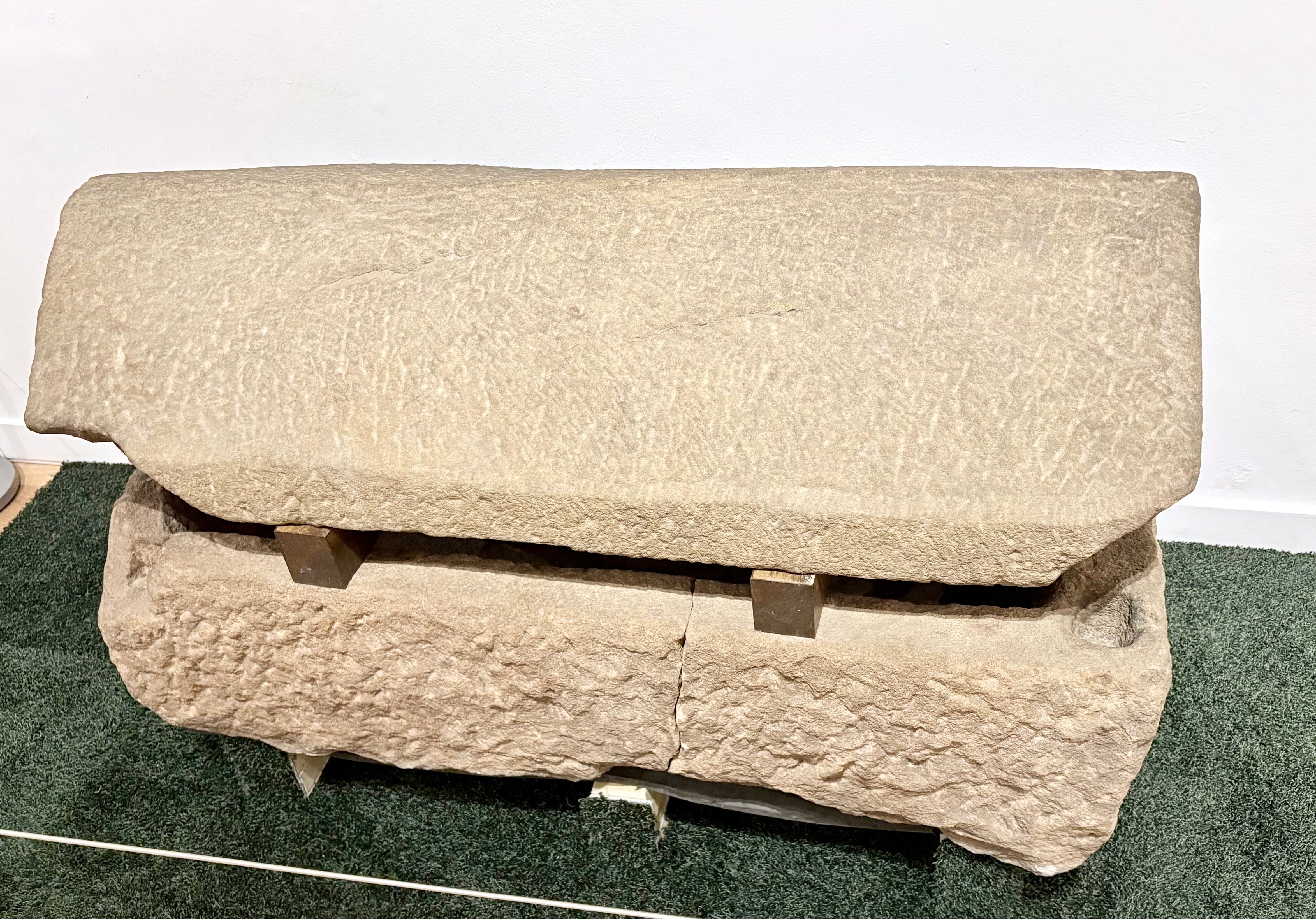
I will close this not with some high-value trinket, but with the largest find in the exhibition, a sandstone coffin, which shows that some dramatic archaeological discoveries do not always result from deliberate excavation. Sometimes they happen by accident.
In 1903, workmen digging the foundations for a new warehouse in Newcastle came across two sandstone coffins. These were relatively small and likely to be child burials, with one coffin containing human remains and an elaborate Roman pot. Over a hundred years later, in 2008, archaeologists from Durham University, excavating at Clavering Place in Newcastle in advance of building work, discovered two sandstone adult coffins. The presumption is that these were the burials of high-status individuals.
I hope I’ve given you a taste of the Treasure: Hidden, Lost, Found exhibition, and for those with an interest in archaeological and historical sites, and who live in or plan to visit northeast England, a visit to this exhibition and, indeed, a perusal of the Great North Museum: Hancock itself will not disappoint.
There’s now going to be a short gap in these weekly meanderings while I go off on my ‘In search of Caravaggio’ European tour (no, I’m not aiming to find his last remains, but to look at as many of his artworks as possible). There will no doubt be a future write-up (or two) of my adventure. ‘See’ you again in a couple of weeks.
Fascinating as always, Harry. Have a great trip !
What a contrast to my own 'finds' — growing up in Wilhelmshaven, people dug up unexploded bombs, and here in Michigan, Native American arrowheads are rare, though we do have Petoskey stones and other fossils along Lake Michigan's shore. You are lucky to have such rich archaeological heritage on your doorstep. Enjoy your Caravaggio tour — I look forward to your write-up.