
The People's Theatre
A couple of photographs and some words ...

Its prices range from sixpence to a half-crown, and if you buy a serial ticket for five shillings you are admitted throughout the season for half-price. The productions that season included ‘Peer Gynt’, ‘Widowers’ Houses’, ‘The Insect Play’, ‘Loyalties’ and ‘The Trojan Women’: good fare, solid tack, value for money. The players are all amateurs…
J. B. Priestley, writing in his 1934 book ‘English Journey’, after watching rehearsals of ‘The Trojan Women’ at the People’s Theatre in Newcastle,
Regular readers will know that I love live theatre, and in and around Newcastle there is always much on offer from the tiny Laurel’s in nearby Whitley Bay to the grand productions of the city’s Theatre Royal, with plenty of others in between, such as the Northern Stage and the Live Theatre. I’ve seen some wonderful productions across many venues, but one I’d heard much about but hadn’t got to until recently is the People’s Theatre, a long-established amateur theatre company with a performance venue in Heaton, a suburb to the north and east of Newcastle. The People’s Theatre is among the largest and most active amateur theatre groups in the UK, performing shows in the venue's main auditorium, which seats around 500, and in its more intimate Studio theatre.
The theatre company was founded in 1911 as the Clarion Dramatic Club by a group of politically active local enthusiasts affiliated with the British Socialist Party. Their first performance was a double bill at the premises of the BSP, not far from Newcastle United’s ground, St James’ Park. In keeping with the spirit of the Clarion Dramatic Club, one of the plays performed was ‘The Bishop’s Candlesticks,’ a one-act adaptation of Victor Hugo’s ‘Les Misérables’ that focuses on the compassionate bishop who reforms Jean Valjean. In contrast, the other one-act play was ‘Pot Luck’ by Gertrude Jennings, which centres around a ‘pot-luck’ dinner where guests each bring a dish to share, creating a lively stage for exploring human quirks, misunderstandings, and the subtle comedy of manners.
From its earliest days, the Clarion Dramatic Club embraced challenging and contemporary drama and signalled a commitment to bold theatrical work, even staging the controversial ‘The Shewing-Up of Blanco Posnet’ by George Bernard Shaw. It’s one of his most provocative short plays and a fiercely satirical attack on moral hypocrisy, frontier justice, and official authority. The play was officially banned from being performed in theatres by the Lord Chamberlain, but the Clarion Dramatic Club got around that by claiming it was a ‘private club’. Something many theatre groups did.
Shaw, a Fabian socialist, polemicist, and champion of theatre as a tool for debate, was famous for his plays that blended wit with provocation rather than sentiment in challenging class hierarchies and interrogating morality, war, and gender. The production of ‘The Shewing-Up of Blanco Posnet’ led Shaw to develop a notably strong and enduring connection with the Clarion Dramatic Club in Newcastle, even though he generally had doubts over amateur productions. Yet in this instance, he gladly approved the Clarion Dramatic Club's performances of his plays and consented to generous royalty arrangements on their behalf. He also liked the Clarion Dramatic Club for its ideological stance, admiring how they treated drama as a forum for ideas rather than just entertainment.
In 1915, the Clarion Dramatic Club moved to premises in the now demolished Royal Arcade on Pilgrim Street in the heart of Newcastle and adopted the name People’s Theatre. While they formally separated from their socialist origins, they continued to stage Shaw regularly, including plays such as ‘Arms and the Man,’ ‘Candida,’ ‘The Devil’s Disciple’ and ‘Mrs Warren’s Profession.’ All bold choices for an amateur company, particularly given that some of Shaw’s works were still controversial or banned elsewhere.
People may not be aware that, until 1968, the control, and thus censorship, of performances in British theatre was by the Lord Chamberlain, a senior official in the royal household. This originated in the early 1700s because theatre was one of the most popular forms of mass entertainment, being relatively inexpensive and accessible, making it a powerful tool for political satire, with plays often openly mocking politicians, royalty, and institutions. This caused the British Government to fear that such public ridicule could undermine its authority, incite unrest, and encourage opposition to the Crown. The tipping point came during a period of intense political instability under Sir Robert Walpole, Britain’s first de facto Prime Minister.
The Government therefore introduced the Theatre Licensing Act of 1737, giving the Lord Chamberlain sweeping powers over the theatre, with all new plays subject to their approval before performance. They licensed all public theatres in Britain and were also empowered to close theatres and ban or demand changes to any play. While the stated aim of the act was to regulate theatres, the real motive was to silence political satire, particularly plays attacking Walpole’s government.
The Lord Chamberlain often censored or banned plays that addressed contemporary politics, criticised the monarchy, aristocracy, and religion, or dealt with sexual morality and class conflict. Writers of the period, therefore, became more indirect and coded, using satire, shifting into safer forms like comedy of manners, or setting controversial works in foreign countries or historical periods. However, more modern playwrights such as George Bernard Shaw, Ibsen, and others frequently clashed with the system. It wasn’t until 1968, some 230 years after the act’s passage, that the system finally collapsed. The legislation that replaced the Act of 1737 relies on standard legal accountability (for example, obscenity laws) to evaluate the content of performances.
In 1929, the People’s Theatre relocated to Rye Hill in the west end of Newcastle, acquiring and repurposing an old chapel. They staged over 500 productions there, but by the 1950s, they had outgrown this venue, so they launched a prominent appeal, involving doyens of the theatre such as Dame Peggy Ashcroft and Sir John Gielgud, to raise funds to purchase and transform the Lyric Cinema in Heaton into a dedicated theatre and arts centre. This new venue opened in September 1962 with a production of Shaw’s ‘Man and Superman’ and Shakespeare’s ‘Twelfth Night’. Sadly, shortly after the People’s Theatre moved out of the Rye Hill building, it was destroyed by fire which led to the adoption of the phoenix rising from flames as the People’s Theatre emblem in keeping with three things central to their self-image of; continuity, the People’s Theatre matters more than the building, collective strength, the company survives through its members and renewal in that each generation reinvents the theatre anew.
By this point, there was wide recognition that the People’s Theatre was one of Britain’s leading amateur groups, particularly for performing plays that, at the time, were unfamiliar to regional audiences and would otherwise have been inaccessible to the people of northeast England. Although the programme was diverse, the People’s Theatre maintained a longstanding relationship with Shaw, which was fundamental to their reputation with critics, and visiting professionals frequently observed the thoughtful rather than reverential approach to Shaw’s work, with performances engaging robustly with the plays’ arguments instead of glossing over them, encouraging audiences to reflect as well as enjoy. All of which echoed Shaw’s view that theatre should be “a factory of thought.”
But as I mentioned, it wasn’t just Shaw’s work, as the People’s Theatre became known for staging provincial or even British premieres of important plays. One such was the first dramatisation of ‘The Bear Dances,’ a play by F L Lucas about the impact of Soviet rule on ordinary people, one of the earliest dramatic treatments of life in the Soviet Union seen on a Western stage. Another first was the world premiere of the darkly comic fantasy ‘Cock-a-Doodle Dandy’ by renowned Irish dramatist Seán O'Casey. Indeed, throughout the mid-20th century, the People’s Theatre helped introduce audiences in northeast England to plays by writers such as John Whiting, Harold Pinter, Samuel Beckett, and John Osborne, often before they gained national recognition. The People’s Theatre also performed the British Premiere of ‘After the Fall’ by Arthur Miller in the late 1960s, demonstrating their role in bringing contemporary global drama to a regional stage. A key moment in introducing notable 20th-century poetry and drama to a northeast England audience was the performance of ‘The Ascent of F6’ by W. H. Auden, staged while Auden was in Newcastle.
Over the decades, the People’s Theatre has nurtured generations of performers and technicians. In 1963, the Young People’s Theatre was established to serve children and teenagers aged 11-17 by providing regular creative opportunities, reflecting the People’s Theatre's ongoing dedication to the local community. The Young People’s Theatre programme gives young performers a real, hands-on foundation in theatre as active creators and performers, meeting weekly for drama workshops that help participants understand how theatre works in practice, from character work to timing and ensemble interaction.
Young People’s Theatre members take part in three to four full productions each year, fully staged on the theatre’s main stage, thus helping emerging actors move from the ‘classroom’ into public performance. Young People’s Theatre isn’t a professional training institution, yet the experiences it offers, from workshops to staged productions, give aspiring actors a solid foundation for future drama school applications or professional auditions. Several past members have said the programme helped them “really build confidence and acting skills,” while also providing valuable practical skills, such as audition practice with many former members going on to professional careers in theatre, television, music and film. Notable names that those in Britain will recognise include Kevin Whately, Tom Goodman-Hill, Andrea Riseborough, Ross Noble and Neil Tennant of the Pet Shop Boys.
Today, the People’s Theatre remains a community-run organisation with members involved in all aspects of production, from acting and directing to managing set construction, lighting, costumes, and front-of-house, offering local people of all backgrounds opportunities to gain experience and help them pursue professional careers in the performing arts.
Certainly, there was nothing amateurish about the two productions I recently saw from the People’s Theatre, and they were of such quality that they would grace any professional stage.
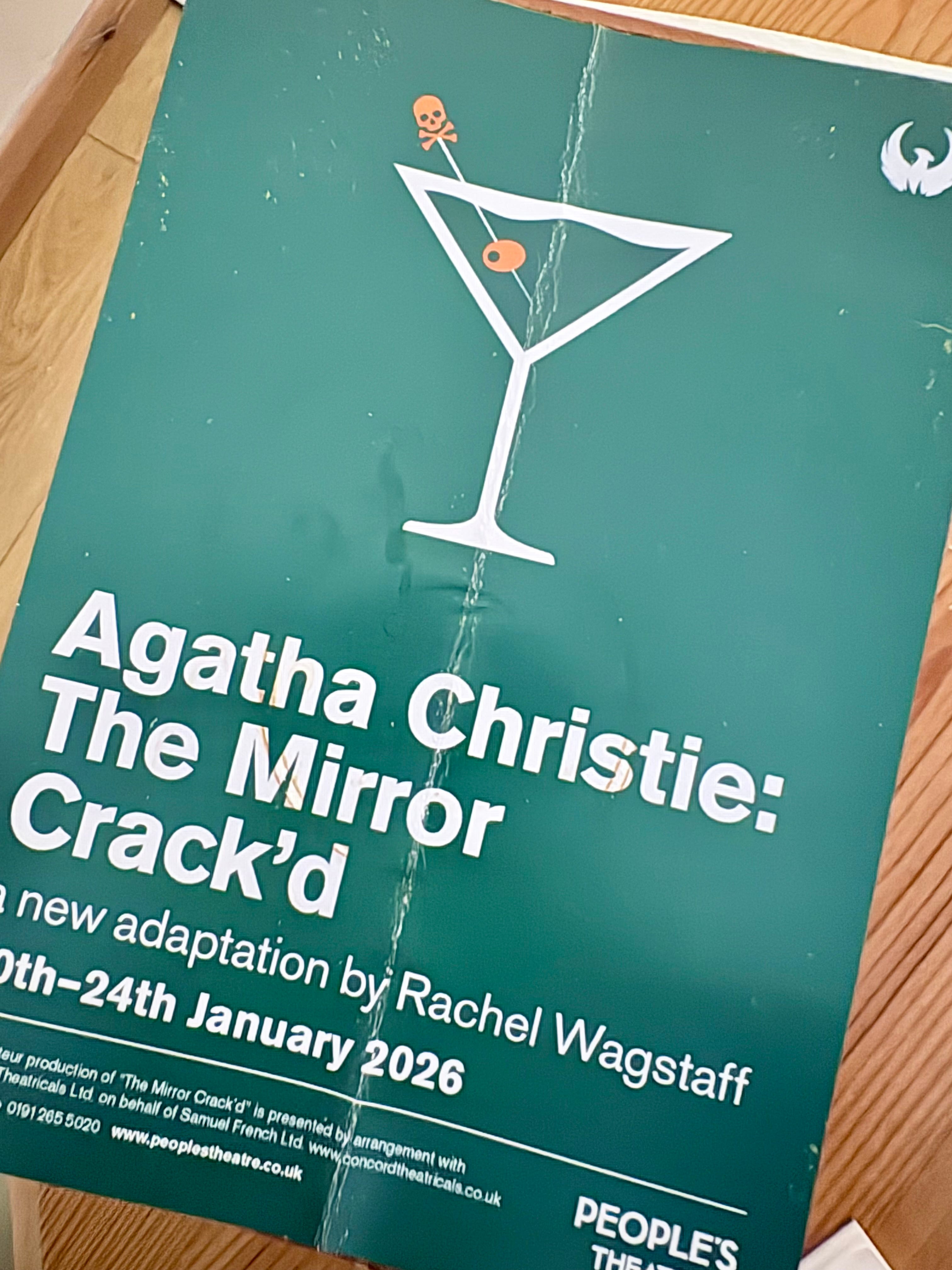
‘The Mirror Crack’d,’ Agatha Christie’s classic whodunnit, delivered an engaging and audience-pleasing night of drama at its best, and while a large ensemble production, the cast steered their course with confidence. Director Sam Hinton cleverly utilised the stage, with different locations like Miss Marple’s cottage and the grand Gossington Hall suggested through innovative lighting and sound cues rather than elaborate sets, which kept the action seamless and visually intriguing. There was a playful energy in the transitions, with flashbacks and ensemble movements that enhanced the Cluedo-like mystery structure. The production values also shone through, from authentic period-appropriate costumes to sound effects tucked discreetly yet effectively into the performance.
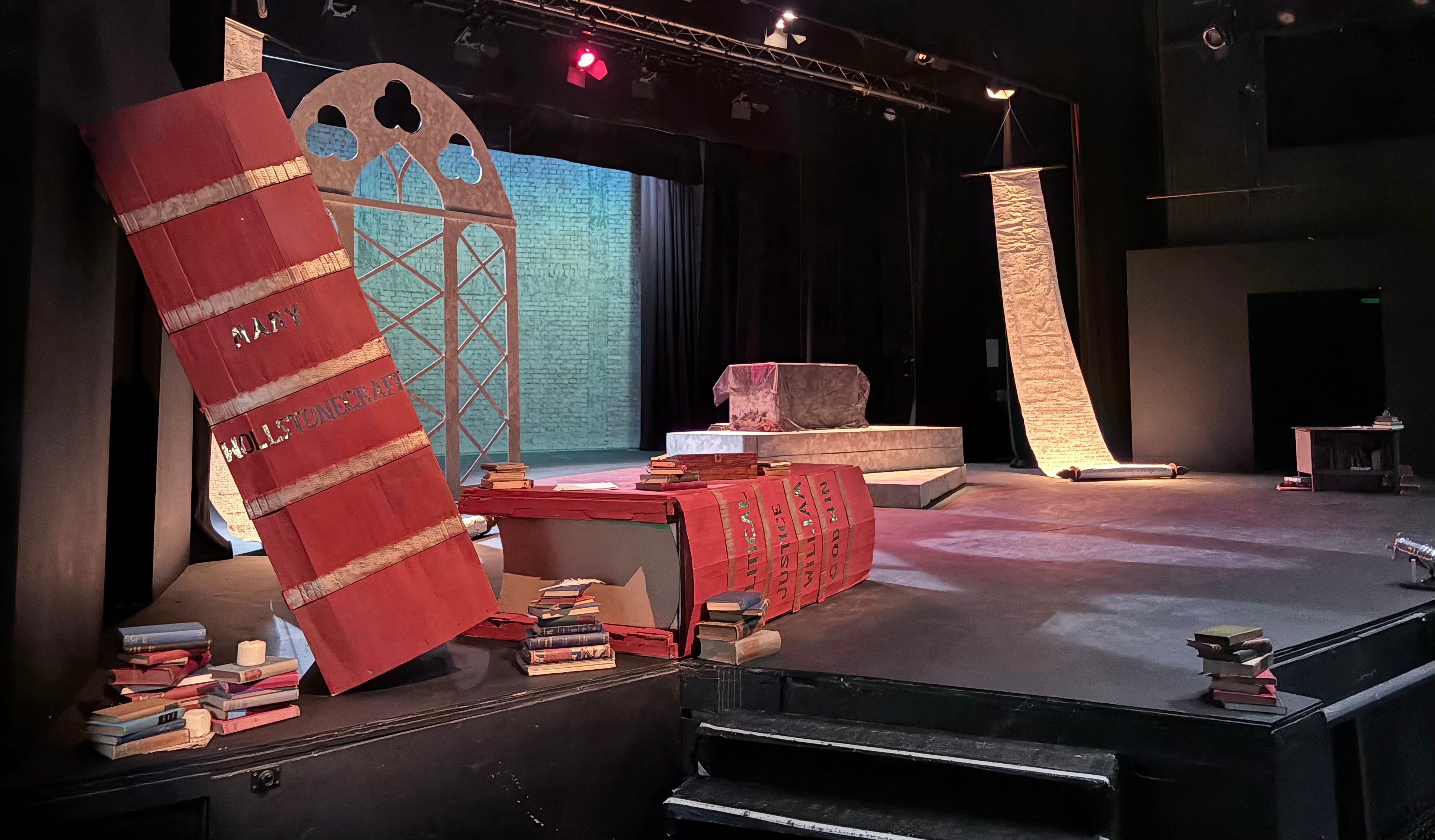
The second production I watched was ‘Mary Shelley’, a play about imagination, emotional rebellion, and literary ambition. Rather than offering a cradle-to-grave biography, the play concentrated on the formative pressures that shaped Mary’s most famous creation. The script weaves together strands of her radical upbringing, her complicated relationships with her family, and her struggle to be taken seriously. The play’s pleasing emphasis was on language and performance over spectacle, appropriate for a story about the birth of a novel rather than its cinematic afterlife, inviting us to reconsider ‘Frankenstein’ not merely as a Gothic milestone but as the product of a young woman navigating grief, ambition, and an unforgiving cultural climate. Visually, the staging was restrained and effective, and the production avoided hagiography, allowing its characters to be flawed, sometimes selfish, but recognisably human.
And I’ll be back next month to see ‘The Thrill Of Love’, a 2013 play by Amanda Whittington that tells the story of Ruth Ellis, through the eyes of a sceptical police officer in charge of the case. Ruth was a hostess in 'gentlemen’s clubs’ in London’s West End and the last woman to be hanged in Britain in 1955 after being convicted of killing her lover, David Blakely, despite the injustices surrounding the circumstances.
As I’ve discovered, the People’s Theatre isn’t just a local amateur theatre company. Once a platform for groundbreaking premieres and a challenge to conformity, it now offers a diverse range of entertaining yet thought-provoking productions. This combination of ambition and community spirit is one reason the People’s Theatre has sustained such a vibrant theatrical identity for over a century.
The theatre sounds like a marvellous community institution. We need one in every town and city!