
Shipley Art Gallery
Some photographs, some art and some words....

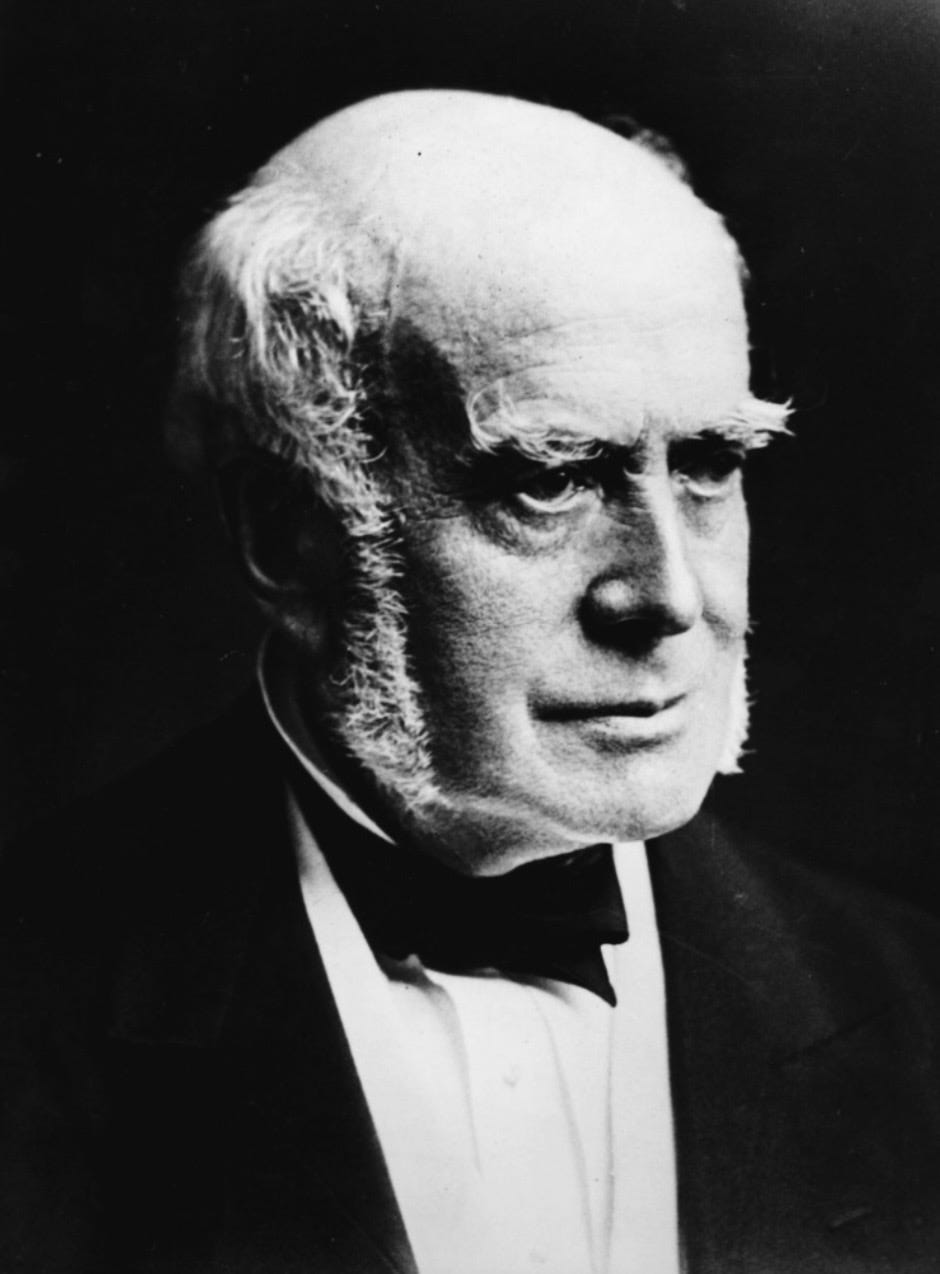
Grant me paradise in this world; I’m not so sure I’ll reach it in the next.
Jacopo Tintoretto
A handful of miles from where I live is Gateshead’s Shipley Art Gallery, one of northeast England’s most important cultural institutions, combining the atmosphere of a traditional civic art gallery with one of Britain’s finest collections of contemporary craft.
The gallery owes its existence to Joseph Ainsley Davidson Shipley, a wealthy Gateshead solicitor and somewhat elusive figure who was born in Gateshead in 1822 and later trained as a solicitor, becoming a partner in the Newcastle legal firm Hoyle, Shipley and Hoyle. Although successful in business, he appears to have led a relatively private life, never marrying or having direct heirs.
Much of what we know about Joseph comes from his will and the art collection he left behind rather than from personal papers or memoirs. Contemporary accounts suggest a reserved and somewhat eccentric man devoted to collecting paintings, and you need to infer much of his personality from his actions. What emerges is a picture of someone who valued art deeply and believed strongly that it should be available to the wider public rather than locked away in private houses.
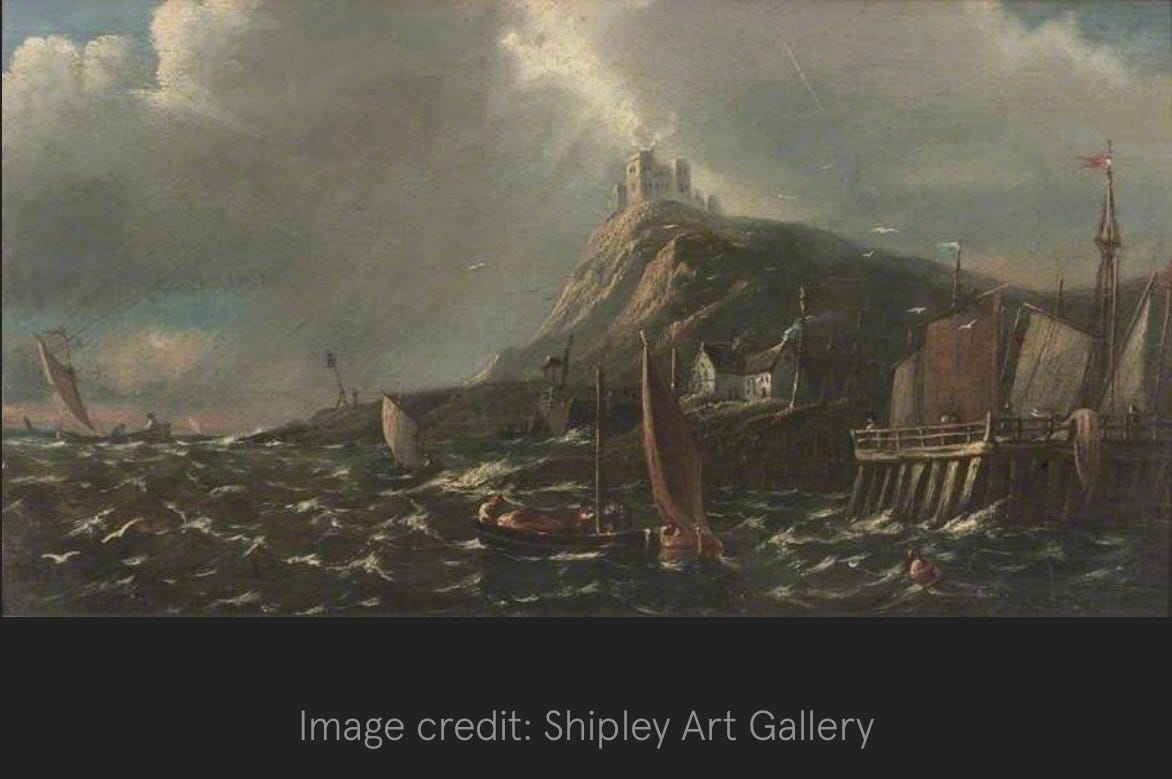
Joseph’s lifelong interest in art began at the age of sixteen when he purchased his first painting, ‘Tantallon Castle’ by John Wilson Ewbank, in Newcastle’s Bigg Market. What started as a youthful purchase became a consuming enthusiasm, and over the next seventy years, Joseph worked closely with art dealers, acquiring paintings in enormous numbers.
Collecting art wasn’t merely a hobby for Joseph; it was the defining passion of his life, and by the time of his death, he had amassed around 2,500 paintings, one of the largest private art collections in Britain. And a varied one that included Dutch and Flemish Old Masters, landscapes, seascapes, religious paintings, Victorian works and historical scenes.
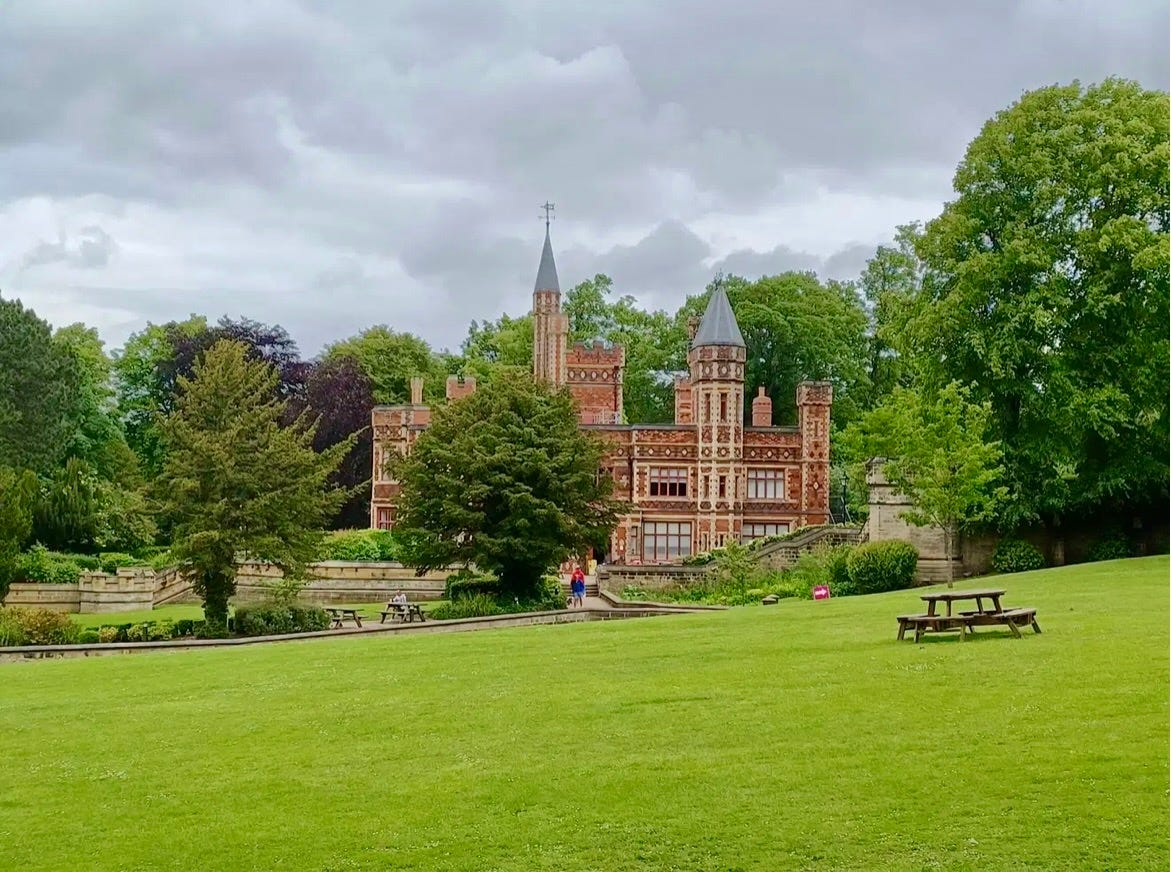
From 1884 until his death, Joseph leased Saltwell Towers, which at that time was a grand mansion surrounded by a private estate. Now the building is a visitor centre and the land around it is the public Saltwell Park. The house became both his home and an immense repository for his collection, with visitors describing rooms crowded with paintings stacked from floor to ceiling.
When Joseph died in 1909, he left not only his paintings but also £30,000 (over £4.5 million today) to create a public art gallery, with the intent that anyone in northeast England should be able to enjoy great art without travelling to places such as London.
Joseph’s will specified that Newcastle Corporation had first refusal on his collection provided they built a gallery to house it. This led to one of the region’s most famous cultural controversies, as unlike wealthy aristocrats who sought only acknowledged masterpieces, Joseph collected broadly and passionately with little concern for fashionable opinion and more with acquiring works that interested him. Some experts dismissed parts of the collection during his lifetime, but others have noted that he possessed a genuine eye for Dutch and Flemish painting. However, at the time, art experts advising Newcastle Corporation questioned the quality of parts of the collection, and the Corporation eventually declined the bequest after some debate. Gateshead Council, on the other hand, recognised its value and accepted the gift in 1912.
Because displaying the entire collection was unrealistic, Gateshead Council selected 504 paintings for the new gallery, with the remainder sold to help finance the building's construction.
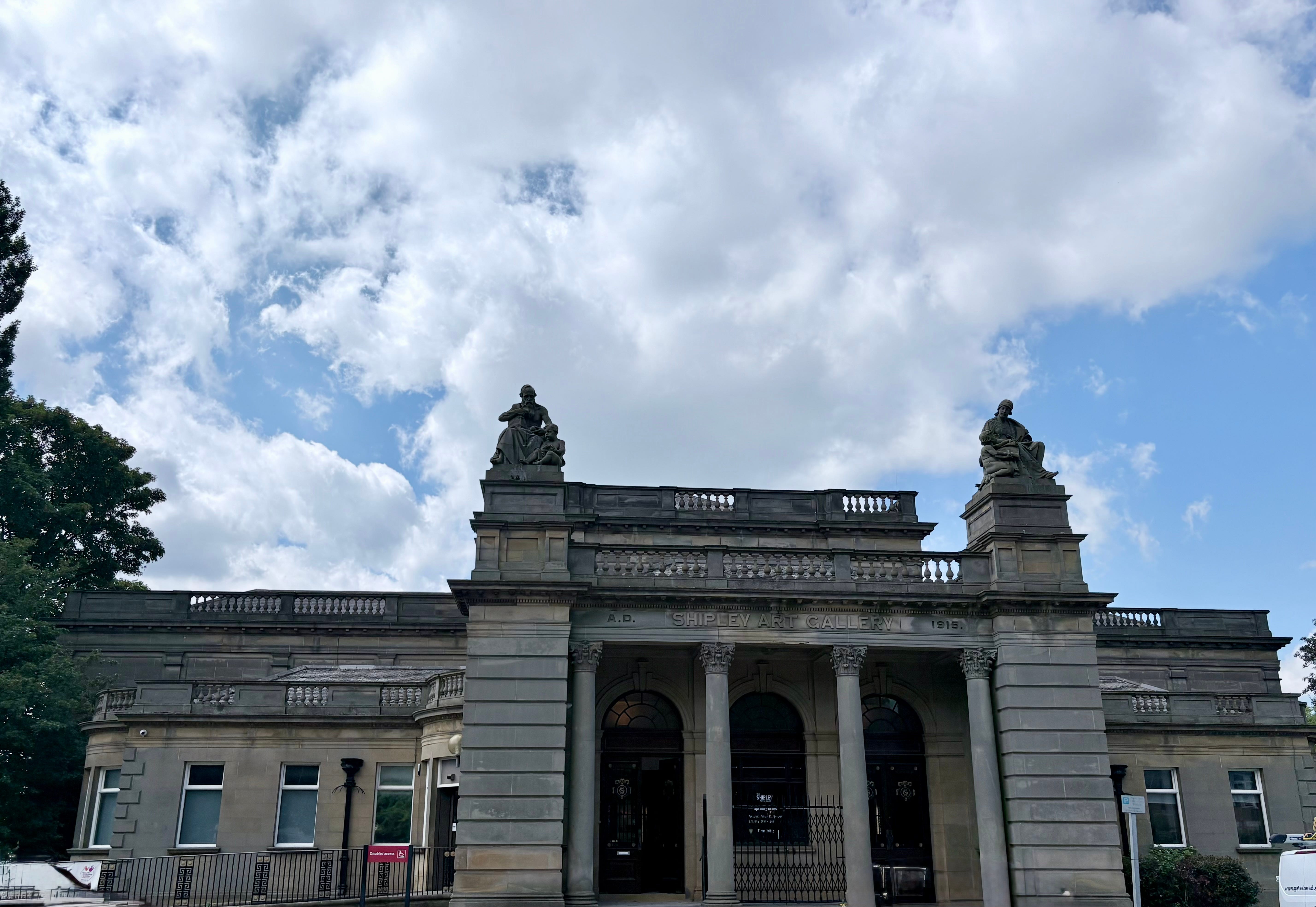
The Shipley gallery building opened on 29 November 1917, eight years after Joseph’s death, and is now Grade II listed, given its status as one of Gateshead’s architectural landmarks and an impressive example of early twentieth-century civic architecture, featuring a grand classical entrance with Corinthian-style columns and sculptural figures representing the Arts, Industry and Learning. However, unlike many grand earlier galleries, once inside the Shipley, it feels cosy, with visitors able to explore several collections without becoming overwhelmed by ‘grandeur’
The paintings selected from Joseph’s collection largely represented major European schools of art from the sixteenth to nineteenth centuries; however, today the collection has grown substantially and while Dutch and Flemish paintings from the sixteenth and seventeenth centuries continue to be prominent, alongside these are works of Victorian British artists and those of northeast England artists (such as the Cullercoats Colony).
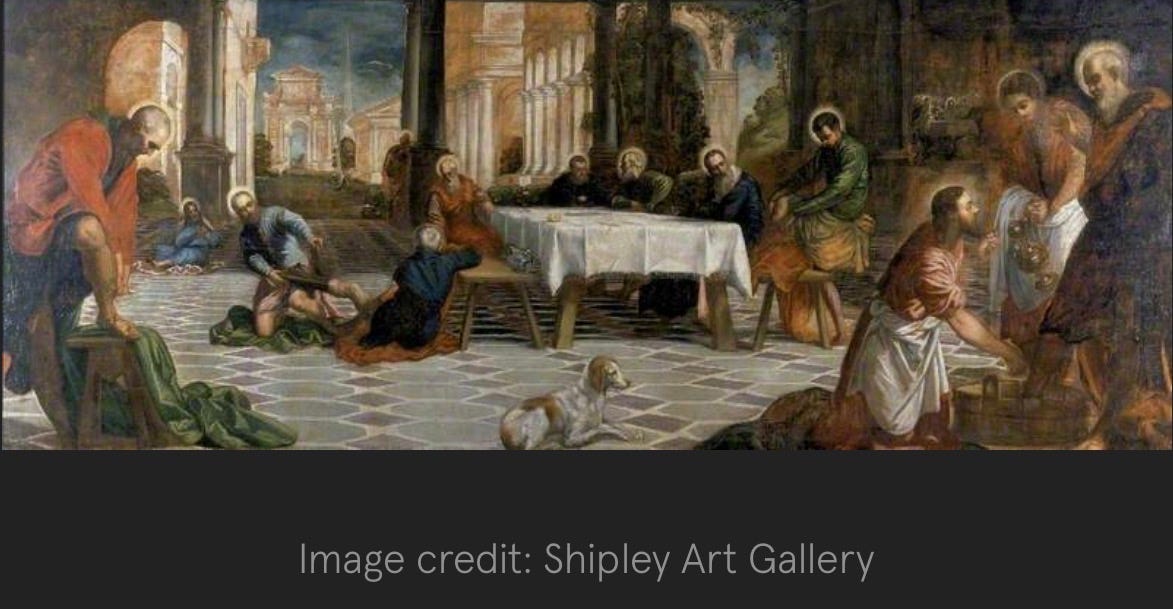
One of the gallery’s most important paintings is ‘Christ Washing the Disciple’s Feet’, created around 1549 by the Venetian master Jacopo Tintoretto for the Church of San Marcuola in Venice. This commission was a companion piece to Tintoretto’s ‘Last Supper‘, which still hangs in the church today. The two paintings flanked the high altar, allowing worshippers to contemplate Christ’s final acts of humility and sacrifice together. The story of how such a masterpiece came to end up in Gateshead is an interesting one.
Tintoretto designed the composition specifically for its location, with Christ placed unusually far to one side of the canvas rather than in the centre. However, from the correct angle inside the church, the perspective resolves itself, drawing the viewer’s eye naturally to Christ as he washes Saint Peter’s feet. It was a bold and innovative use of perspective that reflected Tintoretto’s fascination with illusion, while his dramatic contrasts of light and shade and strong brushwork brought extraordinary energy to the scene, which has a vivid sense of depth and immediacy.
Rather than arranging the figures in a static, symmetrical composition, Tintoretto's ability to combine spiritual meaning with the commotion of daily life sees Christ occupying a humble position quietly washing Peter’s feet, while the other disciples, who appear as real people rather than distant saints, react with gestures of surprise, conversation and contemplation.
At some point in the seventeenth century, the authentic painting disappeared from San Marcuola, but how or why remains unknown. While a copy was commissioned for the church, the authentic piece vanished from the historical record for more than a century, resurfacing in London in 1814, when a French Art dealer offered it for sale. Henry Baring, an art collector, bought it but interestingly resold it the very next day to Sir Matthew White Ridley of Blagdon Hall in Northumberland.
Rather than keeping the masterpiece for himself, Ridley presented it to what was then the Church of St Nicholas (now Newcastle Cathedral) as a gift intended to enrich the city’s principal church with a work worthy of its growing civic importance.
For more than 160 years, the enormous canvas hung above the altar in the church/cathedral, with the local community appreciating the painting, but no one regarding it as a magnificent work. That changed dramatically in 1976, when the distinguished Venetian art historian Rodolfo Pallucchini carefully examined it and concluded that the painting was not simply another workshop version but was likely the authentic canvas produced for San Marcuola. His attribution transformed the painting’s status almost overnight, making Newcastle Cathedral the holder of one of the most important Venetian Renaissance paintings in Britain.
After conservation in London, Newcastle Cathedral placed the painting on long-term loan to the Shipley in 1980, so that more people might appreciate its scale and artistic importance. Tyne & Wear Museums then purchased the painting from the cathedral on behalf of the Shipley six years later with grants from the National Heritage Memorial Fund, the Art Fund, the Pilgrim Trust, the Sir James Knott Trust, and other organisations. This purchase ensured that the culturally important piece remained in northeast England rather than disappearing into a private collection or leaving the region.
Today, people regard ‘Christ Washing the Disciples’ Feet’ as the gallery’s finest painting and one of the most important works of the Italian Renaissance in any regional museum in Britain. It is an unexpected indication that you can find world-class art in good old Gateshead, and not just the likes of London, Florence or Venice.
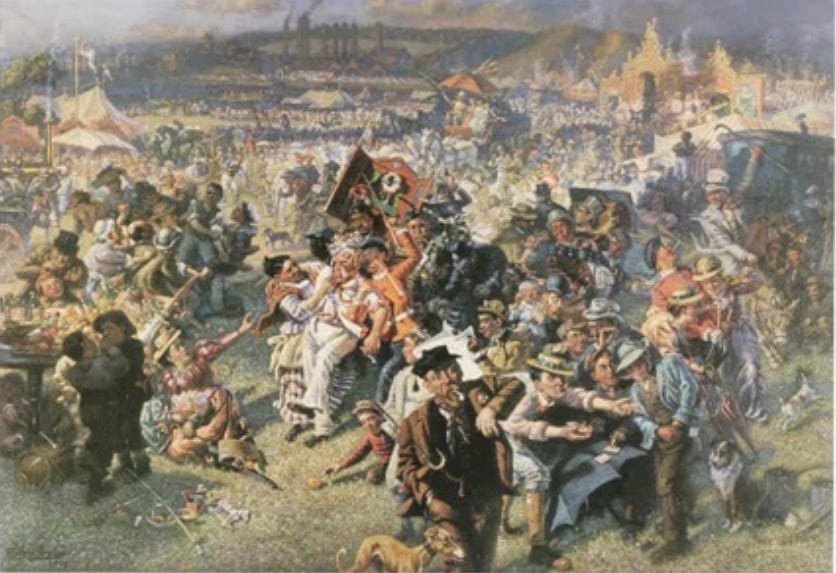
At the other end of the artistic spectrum is Shipley Gallery’s most beloved work, ‘The Blaydon Races’ by William Irving, which depicts the famous Tyneside race day immortalised in Geordie Ridley’s Tyneside anthem of the same name. If London has Hogarth’s scenes of eighteenth-century life, and Paris has Renoir’s celebrations of popular leisure, then Tyneside has William Irving’s ‘The Blaydon Race ', which, more than a century after it was painted, remains one of the most important visual records of Tyneside culture, capturing a community at play with tenderness, wit and extraordinary attention to detail.
The annual Blaydon Races and Fair was one of the biggest days in the Tyneside calendar during the nineteenth and early twentieth centuries, with thousands travelling to Blaydon for horse racing, gambling, drinking, boxing booths, sideshows and other fairground attractions. However, Irving chose not to paint the main event of horse racing but instead captured the busy fairground atmosphere surrounding it. This decision is important because it shifts the focus from sport to people, celebrating ordinary Tynesiders enjoying themselves. In the far distance, you can see the race track next to the River Tyne, and beyond that, the church in the town of Newburn, which sits north of the Tyne.
The painting owes something to Victorian genre painting, where artists portrayed scenes from everyday life. Yet unlike many Victorian works that focused on middle-class respectability, Irving celebrates working-class culture without condescension. The people are lively, comic, and genuinely human in a deliberately busy composition, with a canvas crowded with activity. There is no single focal point; wherever the eye wanders, another story unfolds, with Irving generating a sense of sweeping the viewer into the crowd itself.
One reason the painting became popular is that Irving populated it with recognisable local characters as a Victorian Tyneside “Who’s Who”, some of whom the song also mentions. One is ‘Coffy Johnny’ (John Oliver), who is perhaps the most famous local character in the painting. A former blacksmith from Winlaton, a nearby town to Blaydon, John was well known for his 6 ft 7 in height (a latter-day Dan Burn) and distinctive white top hat. His nickname was from his love of coffee, and he was a familiar sight at race meetings throughout Tyneside with a dubious reputation for the occasional ‘fixing’ of races. Another character mentioned in the song but not pictured is Jackie Broon (Brown), the bellman (town crier) of Blaydon, one of the best-known local figures of his day. Jackie’s grave is in the cemetery beside which I live, and his bell is still used to start the Blaydon Road Race, which takes place each June 9th and generally follows the route people would have taken to get from Newcastle to Blaydon. Interestingly, when Jackie died in 1901, his son, also Jackie, took over the role and would become the last town crier in England, dying in 1935.
Some portrayed in the painting but not mentioned in the song were well-known local characters at the time, such as Gull Willie, a ‘village innocent’ affectionately remembered in Tyneside folklore. In Irving’s painting, the ‘Swalwell Cat,’ a notorious card sharp, is duping Willie during a card trick. There’s also Cushie Butterfield, the legendary heroine of another famous Tyneside folk song (“she’s a big lass and a bonny lass”), whom Irving includes among the region’s most recognisable folk characters. Another character in the painting is ‘Nanny the Mazer’, whose shenanigans after missing a train are captured in another song. There is some argument over whether one of the people portrayed is George ‘Geordie’ Ridley, the writer of ‘The Blaydon Races’, with many believing the central figure known colloquially as ‘George the Plunger’ is intended to represent Ridley, although others think Irving based the face on his own popular cartoon character, the ‘Geordie Pitman’.
One of the painting’s greatest strengths is that it preserves a world in which public fairs were major social occasions where people gathered for entertainment and companionship. When you look at the painting today, it is almost as if you are opening a time capsule from Edwardian Tyneside, the period and place into which my father was born.
Painted in 1903, The Blaydon Races was not always part of the Shipley’s collection, although it’s unclear how the painting ended up in private ownership for almost the first 100 years of its life. Then, in 2002, the work went under the hammer at Sotheby’s in London, and thanks to support from the Heritage Lottery Fund and numerous public and private donations, the Shipley was able to purchase it. An acquisition widely celebrated in the region, as many felt that such an iconic image of Tyneside life belonged here for everyone to see rather than in a private collection elsewhere in the UK.
But away from iconic paintings, perhaps Shipley’s most remarkable achievement is its evolution into a nationally recognised centre for contemporary craft. Since 1977, the gallery has systematically collected innovative work in Ceramics, Glass, Wood, Metalwork, textiles, and Furniture design. Today, the gallery possesses one of the finest contemporary craft collections outside London, with the gallery’s renowned Henry Rothschild collection including hundreds of examples of studio ceramics by leading British and international makers.
One of the Shipley’s most engaging permanent displays is ‘Designs for Life’, which poses the simple yet profound question: why do humans make beautiful things, even for everyday use?
And it will be no surprise that the Shipley is also a preserver of Gateshead’s manufacturing history with examples of Sowerby pressed glass, Davidson glass, Gateshead Art Pottery and the traditional northeast England crafts such as clootie mat making and quilting.
Overall, the Shipley remains deeply embedded in local life, serving as a welcoming cultural space for residents and visitors from across the region and beyond, and it might be said to occupy a unique position in northeast England’s cultural environment. Newcastle has the grand collections of the Laing Art Gallery, while Gateshead has the contemporary architecture of BALTIC Centre for Contemporary Art, and the Shipley sits comfortably between the two, both historic yet innovative, with local and national significance.
More than a century after opening, the gallery continues to fulfil Joseph Shipley’s ambition of bringing great art, design and craftsmanship into the everyday lives of people. It remains one of northeast England’s most rewarding and underrated cultural destinations, and it’s all down to a man who, in many ways, belongs to a distinctive tradition of Victorian civic benefactors such as Sir William Armstrong. However, Joseph left behind no great industrial empire. His monument is somewhat quieter: a gallery built from a lifetime spent collecting paintings and a conviction that art should belong to everyone.
Another excellent one, Harry. I didn’t know about the characters in the Blaydon Races painting. Great to see Cushie Butterfield!
Oh I love the Shipley!