
Jesmond Dene
A map, some photographs and some words ....

As a young person in Newcastle, I can confidently say that Ouseburn is the best place in the city. Its unique blend of history, culture, nature, and community spirit makes it a vibrant and exciting place to live, work, and play. Whether you’re an artist, a music lover, a foodie, or someone who simply enjoys a good walk in the park, Ouseburn has something special to offer.
Alex, 17, writing as part of the Headliners Young Journalist programme.
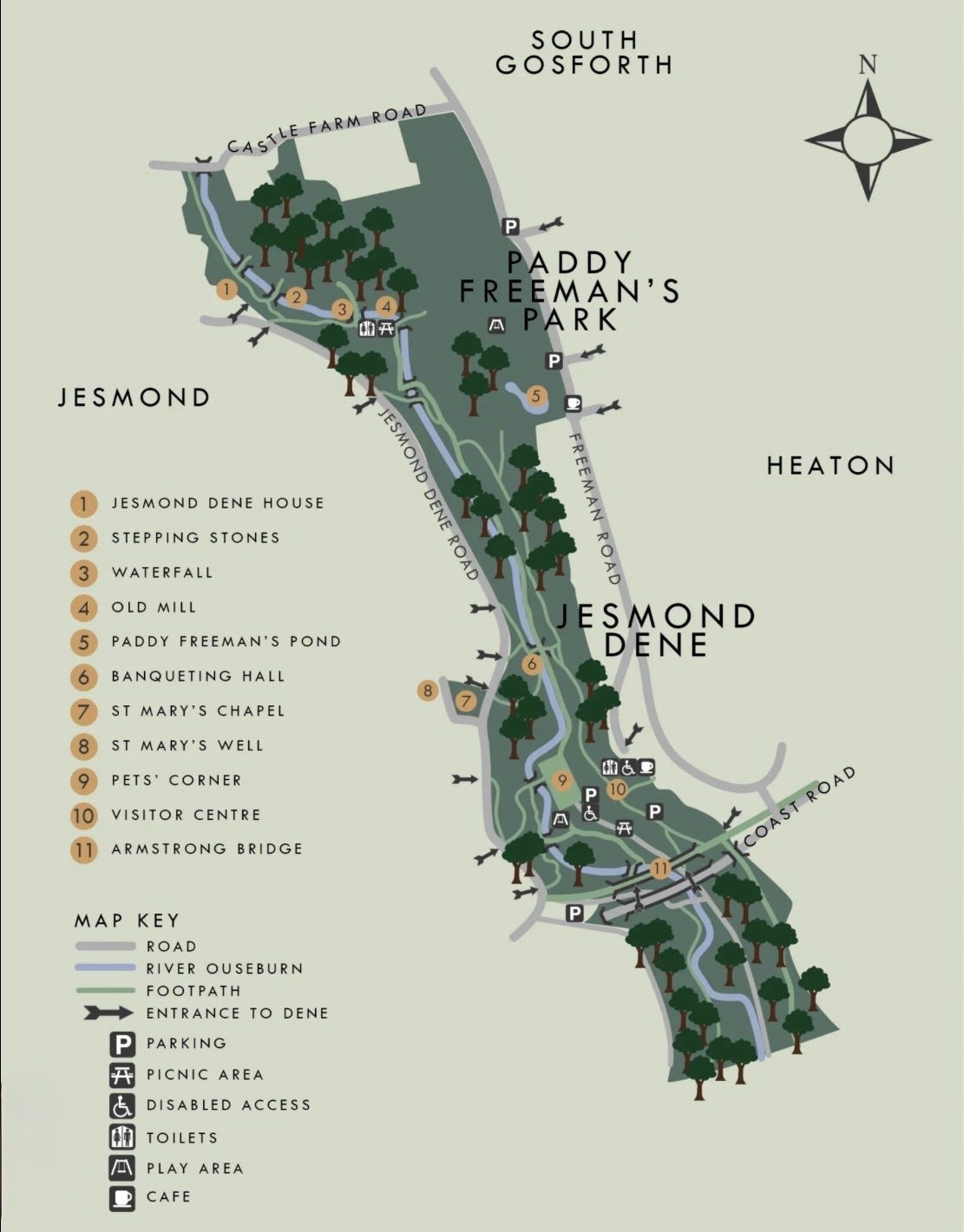
Last week, I wrote of the influence that William George Armstrong, later Lord Armstrong of Whitley, had on the creation of Newcastle University. This week, I write about another landmark in Newcastle that also benefited from his philanthropy, Jesmond Dene. It’s a distinctive green space that’s more than a park; for generations of city dwellers, it’s been a quiet retreat from urban life. A place to walk, encounter wildlife, meet friends and family or simply chill. But it's also an area that, before its creation through Victorian philanthropy, was a centre of religion and then home to industry.
The word ‘dene’ is a northern England term for a steep-sided wooded valley through which a burn, or small river, runs. It crops up frequently in northeast England, such as in Castle Eden Dene, Crimdon Dene, and indeed Dean Street in Newcastle, which runs between Grey Street and the area known as Side. Before the street existed, the route was occupied by the dene of the Lort Burn, a stream that flowed through medieval Newcastle down to the River Tyne. As Newcastle expanded, the dene was gradually filled in, and the burn was culverted underground, creating what became known as Dean Street.
One of the clues to this hidden landscape survives in nearby street names, for example, High Bridge recalls a bridge that once crossed the Lort Burn valley, and although the stream is now buried beneath the city, its course still shapes the topography of Newcastle’s historic centre, serving as a reminder of the natural landscape upon which Newcastle was built.
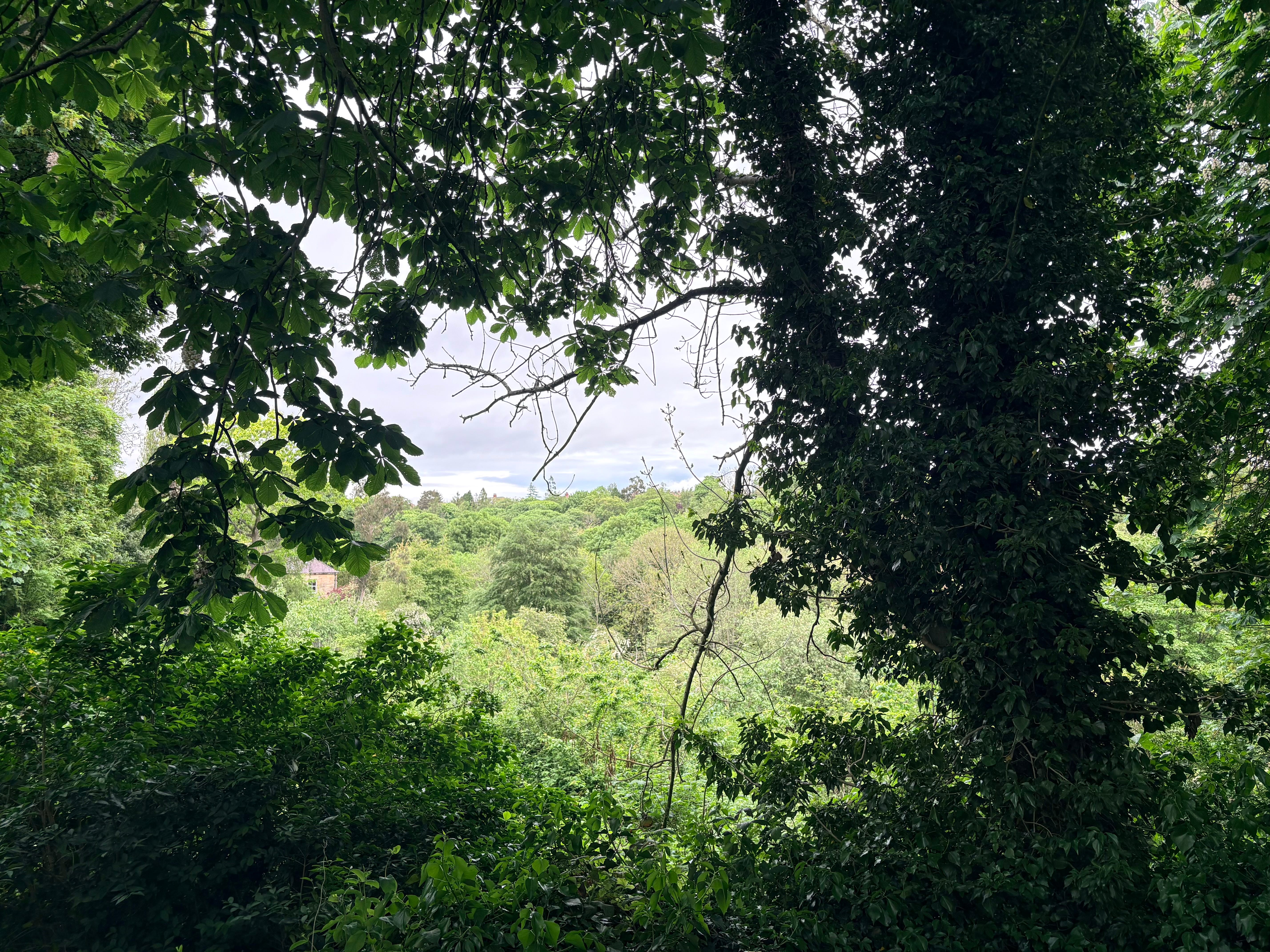
But back to Jesmond Dene, a wooded valley covering some 33 acres formed by the Ouseburn (Jesmond means 'mouth of the Ouseburn’), a small river that flows south toward the Tyne and the lower reaches of which I wrote of in Ouseburn. The dene’s waterfalls, rock formations, bridges, and dense vegetation create a rare environment within a major city, underscoring Jesmond Dene’s ongoing significance as a preserved natural space amid Newcastle’s growth.
During the nineteenth century, Armstrong acquired land in the dene and, in line with Victorian ideas about landscape design, reshaped it into an elaborate private park associated with his nearby residence. The result combined natural scenery with elements crafted for a picturesque effect. Curving paths, ornamental structures, planted woodland, and dramatic viewpoints encouraged visitors to experience the landscape emotionally and visually, reflecting nineteenth-century beliefs that nature promoted well-being.
Armstrong then made the significant decision in 1883 to gift Jesmond Dene to the people of Newcastle, an act of philanthropy that transformed a private ‘playground’ into a public amenity, consistent with a wider Victorian tradition in which wealthy industrialists funded libraries, parks, galleries, and educational institutions for civic benefit. Such gifts reflected the ideas of the time on social responsibility and urban improvement, with the growing view that, in rapidly industrialising cities, access to green space was essential; therefore, nineteenth-century public parks in the UK carried important social significance.
Pollution and overcrowded dwellings plagued industrial Newcastle during its rapid growth in coal mining and shipbuilding, and places like Jesmond Dene offered recreation, exercise, and respite from that. Jesmond Dene also developed a distinctive identity by retaining a more irregular, absorbing atmosphere compared to formal Victorian parks. Even today, the contrast between the park’s busy urban surroundings and the secluded valley heightens its function as a place of escape and reflection within Newcastle.
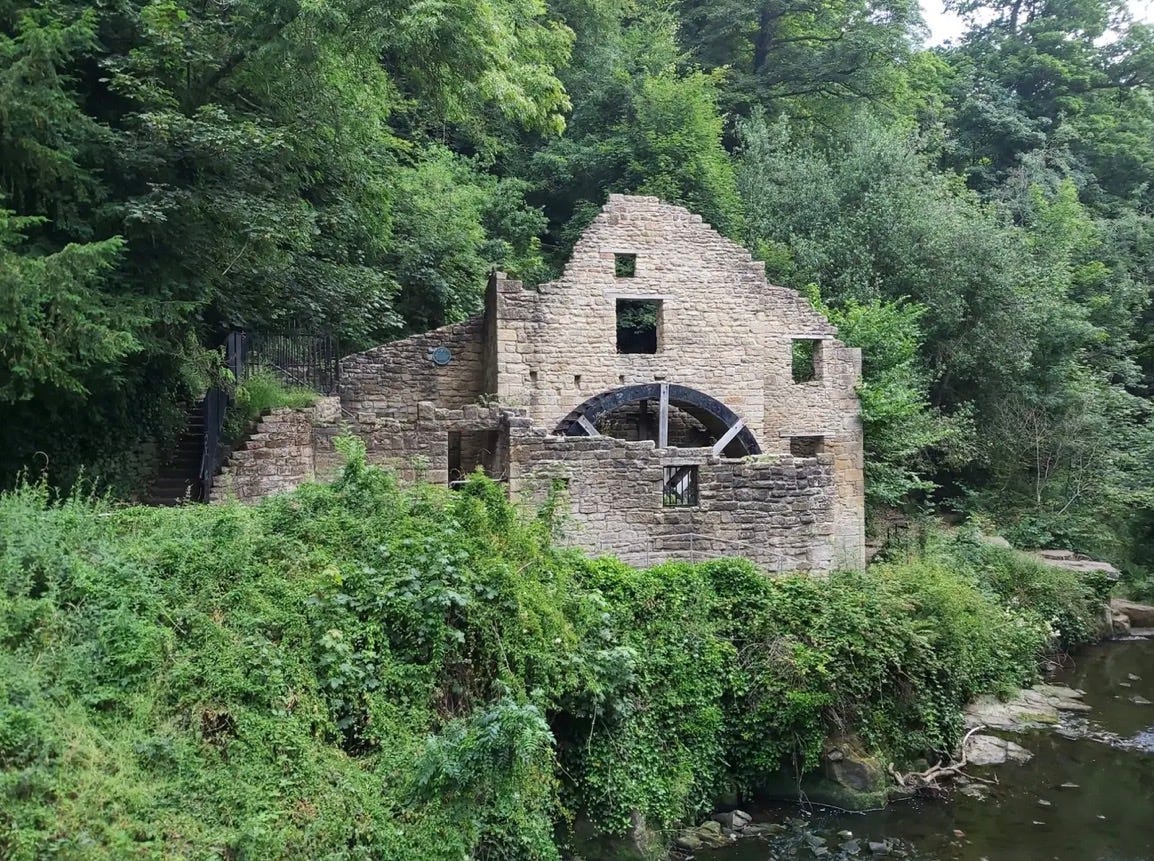
A notable feature of the park is the Old Mill, an evocative remnant of the Ouseburn Valley’s industrial past. Hidden among trees beside the Ouseburn, the picturesque ruin appears almost like a medieval relic, yet its history tells the story of the valley’s transformation from a rural setting of water-powered industry into the Victorian parkland enjoyed today.
Documented evidence shows that Watermills were in use in the dene since at least the 1300s, and it's known that a watermill stood on the site of the present one from at least 1739, when it was known as Mabel’s Mill, the name later changing to Heaton Mill. At about the time the current mill was built, the Freeman family took ownership, and several generations of that family operated the mill, with their name surviving nearby in Paddy Freeman’s Park and the Freeman Hospital.
As more industry developed along the Ouseburn in the eighteenth and nineteenth centuries, the mill adapted to changing economic needs. After its use as a flour mill, it was used to grind pig meal and later to crush flint destined for the pottery industry further down the valley.
The mill’s purpose changed again when Armstrong purchased the dene in 1862. By then, it was no longer commercially viable and had ceased industrial operations, and was instead used as a domestic dwelling until the 1920s.
The building visible today dates mainly from the mid-to-late nineteenth century, although it’s believed to incorporate earlier structures. Now a romantic ruin, it retains traces of its machinery and mill workings, with rocky walls, a riverside setting, and a nearby waterfall, making it a popular spot in Jesmond Dene.
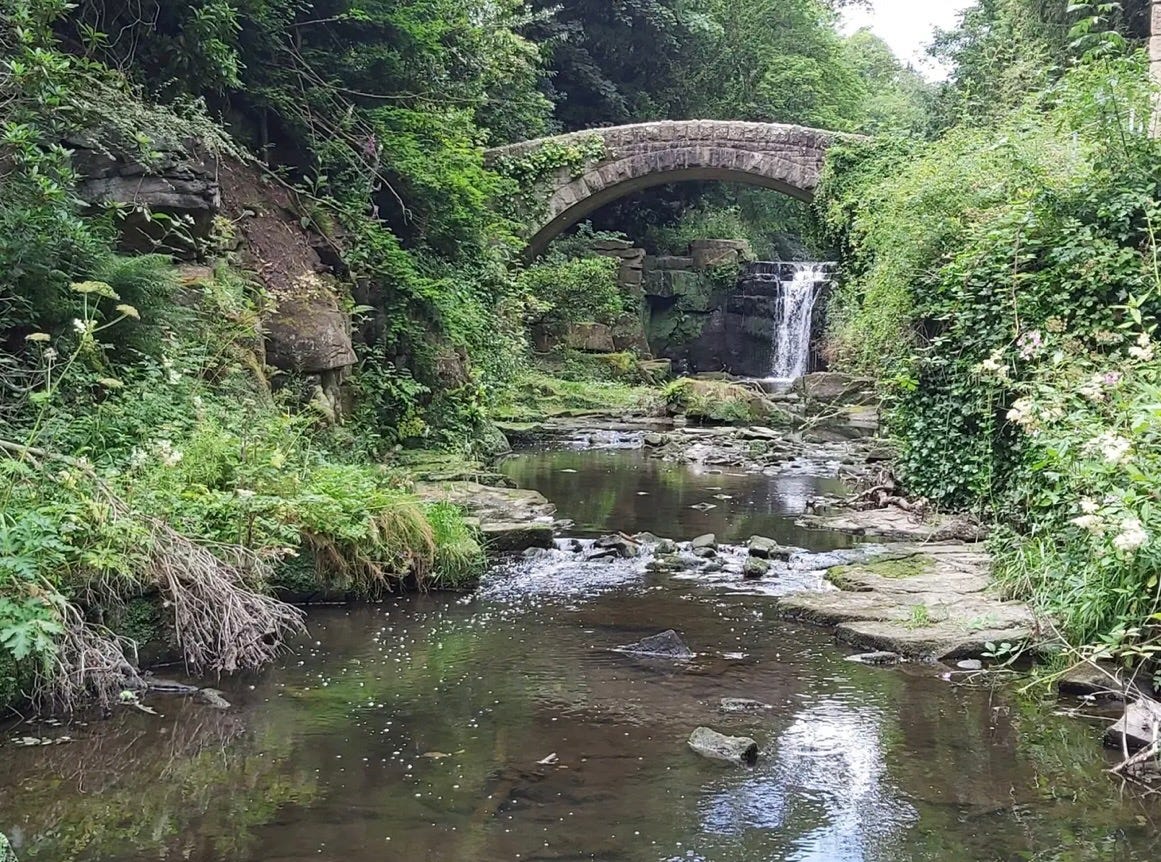
And so to that waterfall, perhaps the park’s most famous feature. Many visitors assume it is natural, but it is a remarkable piece of Victorian engineering by Armstrong, who redesigned the course of the Ouseburn to dramatic effect, with the waterfall his largest intervention. Explosives were used to blast out a gorge, and the excavated stone was then used to build up the sides of the cascade, with the aim of creating something that looked wild and natural, when in truth all was by careful design.
Nearby, Armstrong also created a grotto from an old quarry, allowing Victorian visitors to explore this artificial cave and experience a sense of mystery before emerging to views of the waterfall and the valley beyond. Such features reflected the nineteenth-century taste for romantic landscapes that combined nature, engineering and theatrical effects.
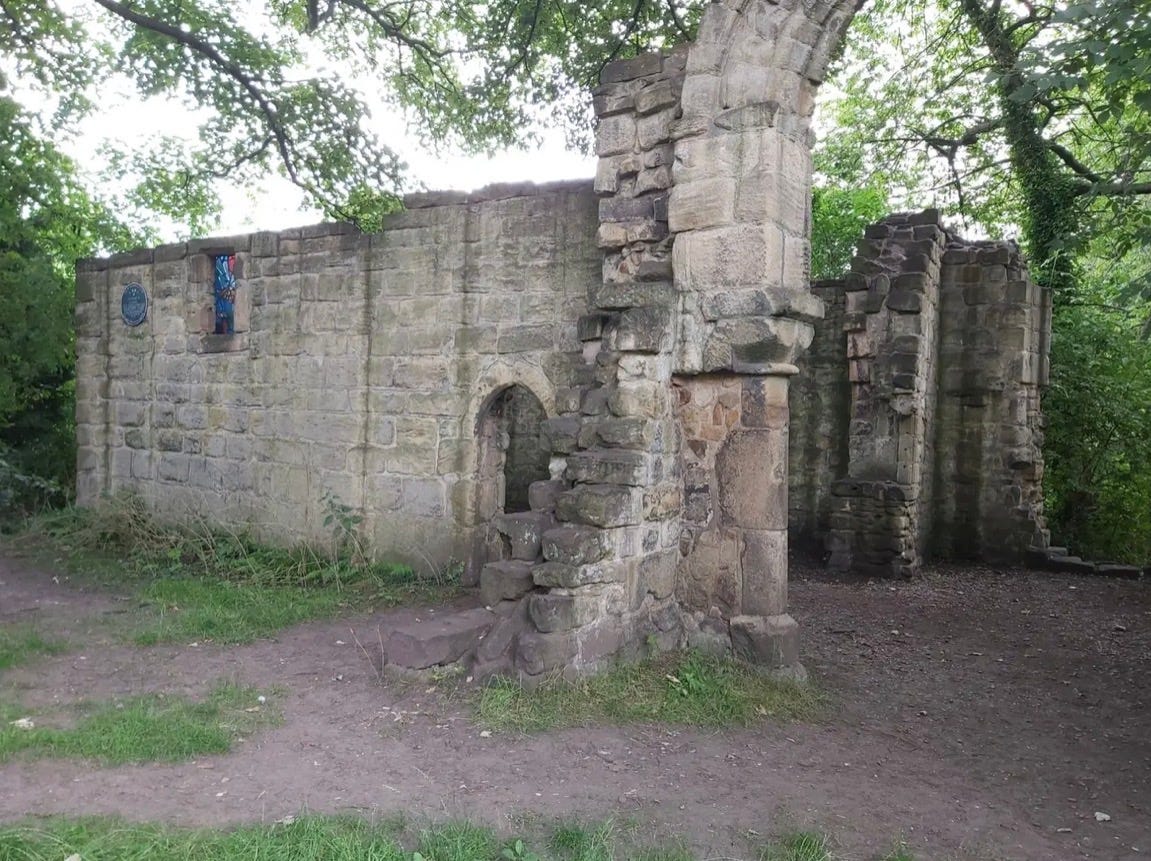
Hidden among the trees above Jesmond Dene are the atmospheric ruins of St Mary’s Chapel, which, in many ways, is the hidden heart of the dene, as the oldest surviving church building in Newcastle. Although only fragments remain today, the chapel was once one of the most important pilgrimage destinations in medieval northern England.
It’s believed that the chapel dates from the early twelfth century and was founded by the Grenville family, Lords of Jesmond. The oldest surviving feature is a Norman chancel arch dating from this period, while additions were made during the fourteenth and fifteenth centuries as the chapel’s importance grew.
And that importance stemmed from the belief that it was a place of miracles. Medieval tradition held that the Virgin Mary had appeared in the valley, and a sacred relic associated with her was kept at the chapel. Pilgrims travelled from across England to visit the shrine and the nearby holy well, seeking healing and spiritual aid. By the fifteenth century, people regarded St Mary’s as a significant pilgrimage site, with one contemporary benefactor even ranking it alongside the great shrines of Canterbury and the old St Paul’s in London.
St Mary’s was more than a chapel, as historical records indicate that it formed part of a larger religious complex that included a hospice/hospital where pilgrims could receive care. The chapel frequently appears in medieval legal disputes involving both the Crown and the Papacy, underscoring its wealth and significance, but its fortunes changed dramatically during the Reformation after its dissolution in 1548, and the buildings gradually fell into ruin, with parts of the site reused for agricultural purposes, while other buildings disappeared altogether. By the nineteenth century, what remained had become a romantic relic overlooking the dene.
The ruins survived, in part, thanks to Armstrong's efforts after he acquired Jesmond Dene and today, the chapel is protected under Grade II as both a listed structure and a scheduled monument. More than that, its once importance still influences Newcastle’s geography, as it’s believed that Pilgrim Street takes its name from the route used by travellers journeying to the shrine connecting medieval Newcastle to wider religious networks across England.
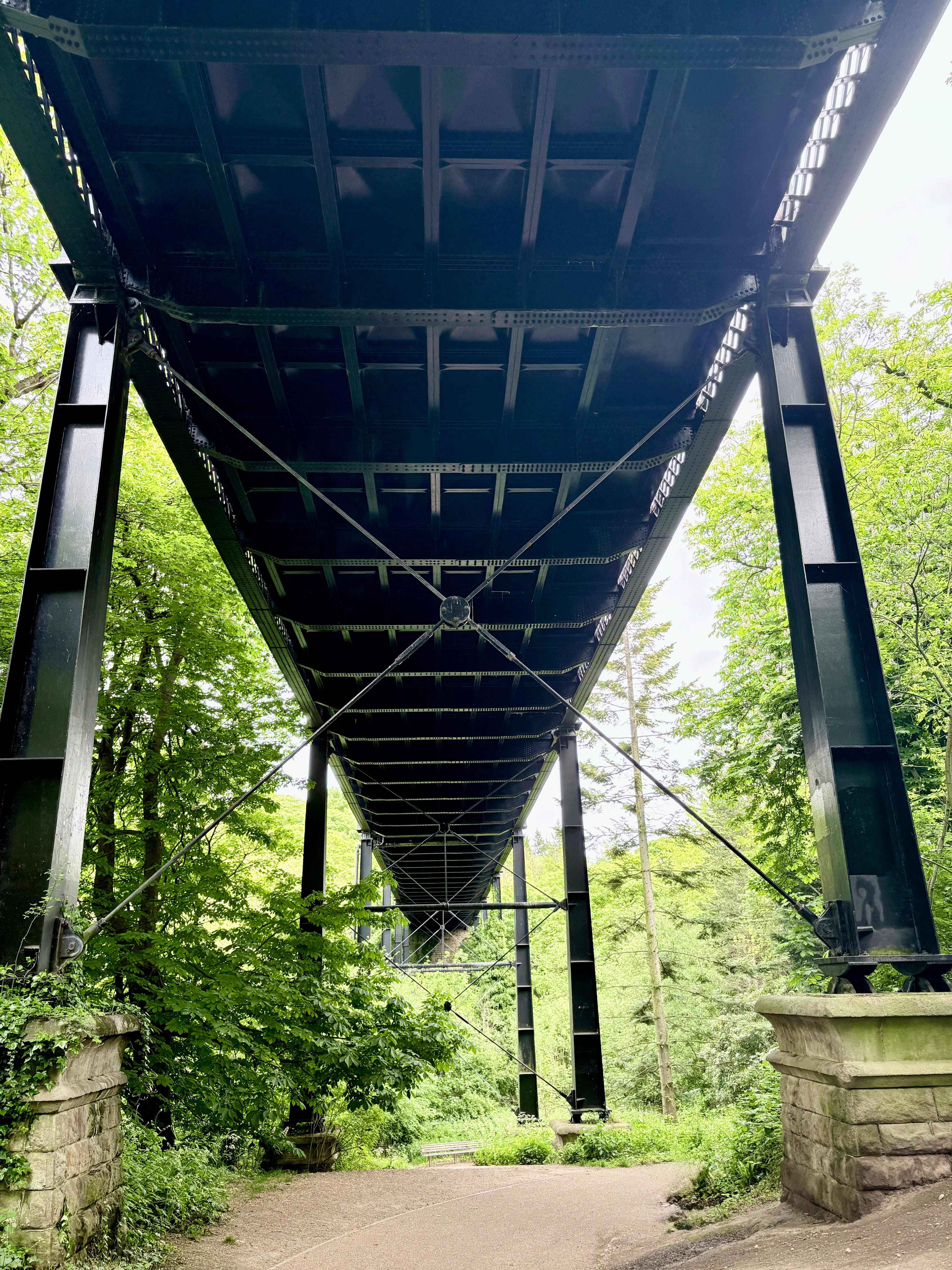
Finally, let’s take a look at Armstrong Bridge, one of Newcastle’s most distinctive Victorian landmarks, which spans the wooded valley of the Ouseburn at the southern end of Jesmond Dene. It’s an indication of Newcastle's notable transformation in the late nineteenth century, with the bridge’s elegant appearance complementing the dene’s natural beauty. As the bridge sits on land mined for coal, Armstrong designed it to adjust itself if the ground below moved, making it the first bridge in the world to do so. It took two years to build, cost £30,000 (close to £4m today), and opened in 1878.
There is a story that Lady Armstrong wanted the bridge built to make life easier for the horses that otherwise pulled heavy loads up the sides of the valley. When it first opened, it was for pedestrians and horse-drawn wagons; later, it carried motorised traffic until 1963, when that was discontinued because the bridge could not support the additional weight. Amazingly, there were threats to demolish the bridge in the 1970s (then again, that threat seemed to hang over the whole of Newcastle at the time) due to the high cost of its repair, but fortunately, a strong public campaign involving local residents, historians and conservationists argued that the bridge was not merely a road crossing but an important piece of Newcastle’s heritage.
Following its rescue, substantial restoration work was carried out on the bridge in the 1980s and 90s, with some structural elements replaced or replicated, ensuring that it could continue to stand while preserving its historic appearance. It is now a Grade II listed structure and one of the finest surviving examples of Victorian bridge engineering in Britain.
Today, the Old Mill, together with the waterfall, Armstrong Bridge, and St Mary’s Chapel, helps make Jesmond Dene a place where natural charm and local history blend in a uniquely Newcastle landscape, but the dene also holds environmental importance with its woodland habitats supporting bird, mammal, insect, and plant species that are uncommon in heavily urbanised settings. As awareness of biodiversity loss and environmental protection has grown, municipal green spaces such as Jesmond Dene have taken on greater importance, serving not only as recreational landscapes but also as ecological corridors and refuges for wildlife.
Culturally, Jesmond Dene occupies a powerful place within Newcastle’s identity, appearing frequently in local memory, literature and photography, with the dene’s importance perhaps increasing as Newcastle evolved from industrial powerhouse to post-industrial city. As heavy industry declined, landscapes associated with wellbeing, heritage, and environmental quality gained renewed value, and Jesmond Dene now contributes to perceptions of Newcastle as a liveable, culturally rich city rather than merely a former centre of coal mining and shipbuilding. Unlike iconic monuments associated with tourism, its significance is often intimate and personal. For many local residents, Jesmond Dene is simply part of their daily routines, such as strolling for gentle exercise, walking with their dogs and running, as well as social gatherings like picnicking with friends and family, attending seasonal events, or simply seeking quiet after work.
Such everyday relationships make Jesmond Dene culturally important in ways that are difficult to quantify, but ultimately its significance lies in more than scenery. The same wooded valley has served different purposes over the centuries: as a natural environment, a productive landscape, a private estate, a public park, an ecological habitat, and a community space. Each layer of use adds to its meaning and serves as a physical record of changing relationships between nature and the people of Newcastle. In a city once defined by heavy industry, Jesmond Dene offers something increasingly valuable: an indication that civic identity comes not only from buildings and commerce, but also from landscapes where communities rest, reflect, and connect with the natural world.
An excellent read!
If only more green spaces were created within modern urbanisation it would be good not just for wildlife but as a place where people can enjoy it.
Harry - a great read. Thanks for posting.