
Exploring Identity
Some paintings and some words...

Photographic portraits wither much sooner than we ourselves do, whereas the painted portrait is a thing which is felt, done with love or respect for the human being that is portrayed.
Vincent van Gogh, who painted more than a few portraits in his time.
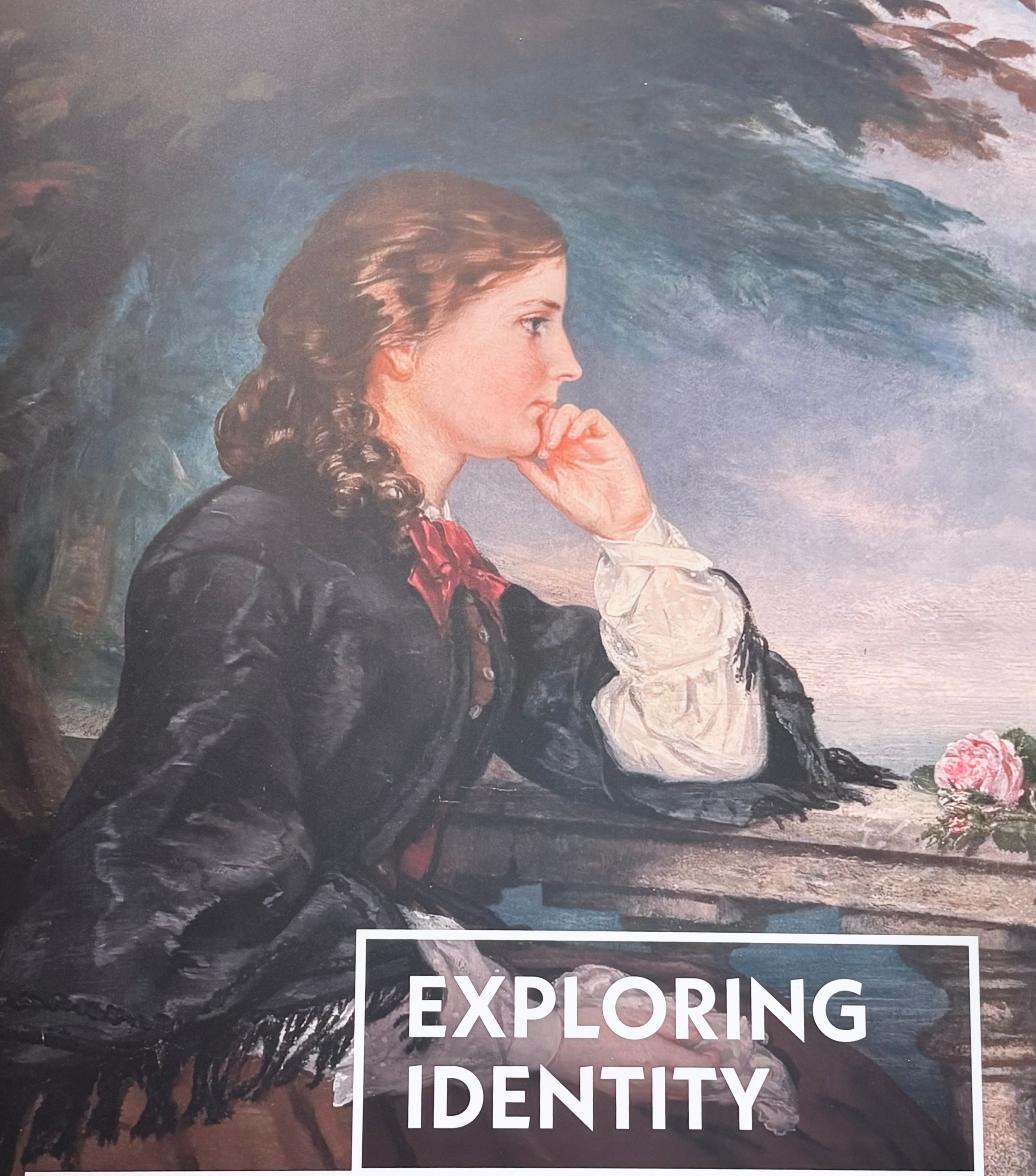
It was to the ‘Exploring Identity’ exhibition at Newcastle’s Laing Art Gallery a week or two back. It’s a thoughtful, thought-provoking portrait-focused show that runs alongside an exhibition of the 48 shortlisted paintings from last year’s ‘Herbert Smith Freehills Kramer Portrait Award’. Together, the two exhibitions form an interaction between past and present portraiture, with the award-winning paintings showing where portraiture is now and ‘Exploring Identity’ setting a historical context.
As not everyone may be familiar with the ‘Herbert Smith Freehills Kramer Portrait Award’, I’ll start with a few words on that.
Running since 1980 and organised by the British National Portrait Gallery, the award has become one of the most prestigious international competitions for contemporary portrait painting and a major platform for both up-and-coming and established artists working in portraiture. The competition is known for high artistic standards, and the quality of the submitted work is extremely high. In 2025, the competition received 1,314 entries from artists in 61 countries. The judging panel viewed 274 works in person and selected 46 paintings as a ‘shortlist’ for the exhibition, which showcased an engaging range of approaches to portraiture, from classic to contemporary styles. These paintings largely explore relationships, both social and familial, with a focus on the relationship between the artist and the sitter. At the end of the competition, after the selection of the winners, the National Portrait Gallery hosts a major exhibition of the shortlisted works and also allows them to tour. An important aspect of the latter is that it brings world-class contemporary portraiture to regional audiences.
The competition has a major influence on contemporary figurative painting, establishing a benchmark for technical and conceptual excellence while highlighting the ongoing evolution of portraiture. Many past winners and exhibitors have gone on to major careers, making it a kind of barometer for the future of portrait painting. The winner receives £35,000, second place £12,000, and third place £10,000. The young artist (aged 18-30) winner receives £ 9,000.
Now back to the Laing Gallery, where the two exhibitions sit in separate rooms and in the spirit of van Gogh, they certainly convey how portraitists aim to express the essence of a person, not simply as a physical likeness, but to reveal something deeper about their personality and experience.
So let’s enter the first room and ‘Exploring Identity’, a collection of 27 portraits in distinctive styles drawn from the collections in the Laing, Hatton and Shipley galleries.
The paintings on show span several centuries, helping visitors trace the evolution of portrait painting from the 16th century to today and, across that timeline, explore ideas such as emotional and psychological selfhood, culture and heritage, and the relationship between artist and sitter.
Traditionally, prominent individuals (usually men) commissioned portraits to ensure a memory of them would endure. Filled with symbolism, such portraits regularly depicted an idealised version of the sitter in beautiful surroundings, expensive clothing or uniforms, and indeed armour, signifying power and strength. Props such as books and artworks symbolised knowledge and culture, while a coy smile could hint at an untold secret. Together, the artist and sitter created the identity the sitter wished to present to the world, with each painting telling a story without words.
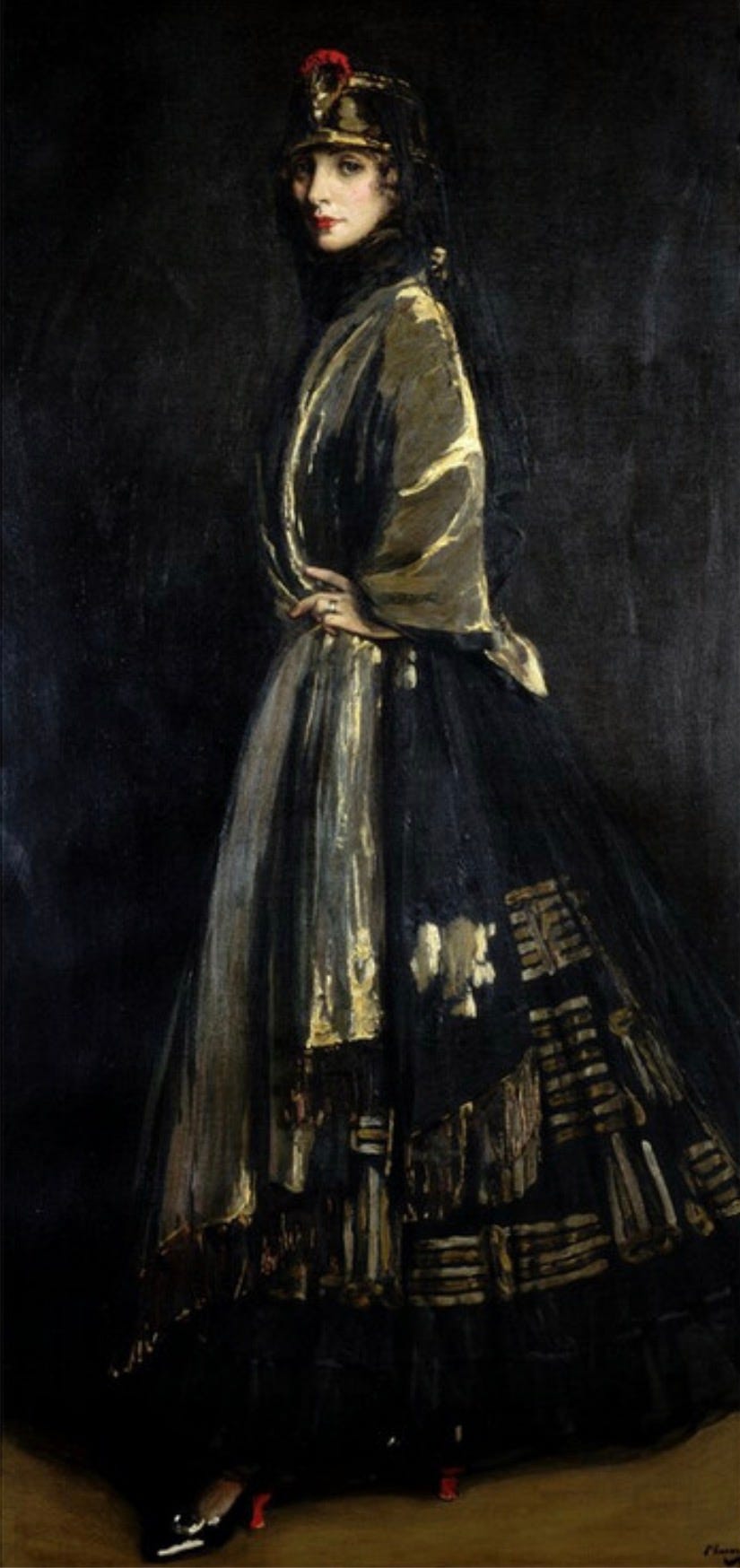
One notable striking example of this is ‘Hazel in Black and Gold‘ by Sir John Lavery, depicting his wife, Hazel. Lavery’s portraits often sit somewhere between realism and refinement with loose brushwork that’s still attentive to gesture and presence, showing how portraiture can act almost like theatre with the sitter collaborating in moulding their appearance. None more so in this, with golden highlights standing out in this otherwise overwhelmingly dark portrait, and the sharp contrast exaggerates Hazel’s elegance, while her military-style hat may be a nod to the ongoing Great War when ‘Hazel in Black and Gold‘ was painted. As a footnote, Hazel apparently attended the private view of the painting, disguised as a highwayman, to gauge people's honest reactions to it.
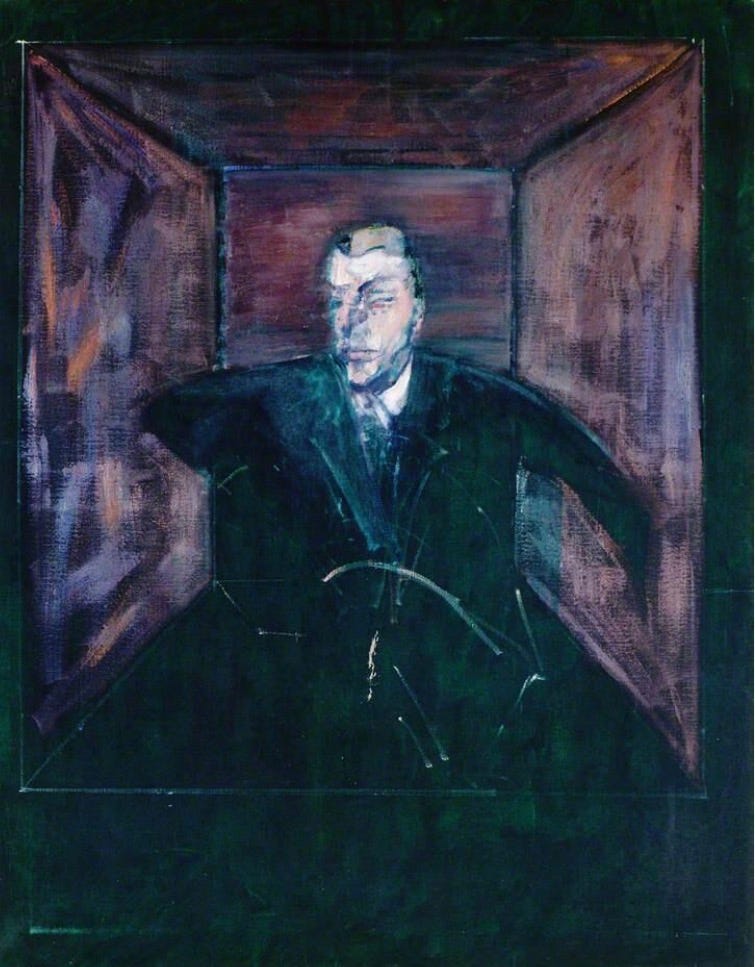
Another painting that caught my eye was ‘Study for Figure Vl’ by Francis Bacon, part of a series created during Bacon’s tempestuous relationship with his lover Peter Lacy. Bacon’s portraits are often the most immediately striking and disquieting works in any room, and rather than presenting a likeness, in this painting Bacon distorts the human face into something virtually unstable, as if identity itself appeared in flux. Bacon is known for his exploration of the extremes of human passion, and in this, he seems to capture the sitter’s unease in an enclosed space, a frequent motif in Bacon’s work. There has been speculation that Bacon’s use of claustrophobic imagery indicates instances of neglect in Bacon’s childhood. However, Bacon stated that he simply used cage imagery as a device to focus the image, often referring to “trapping an image or moment” inside a painting.
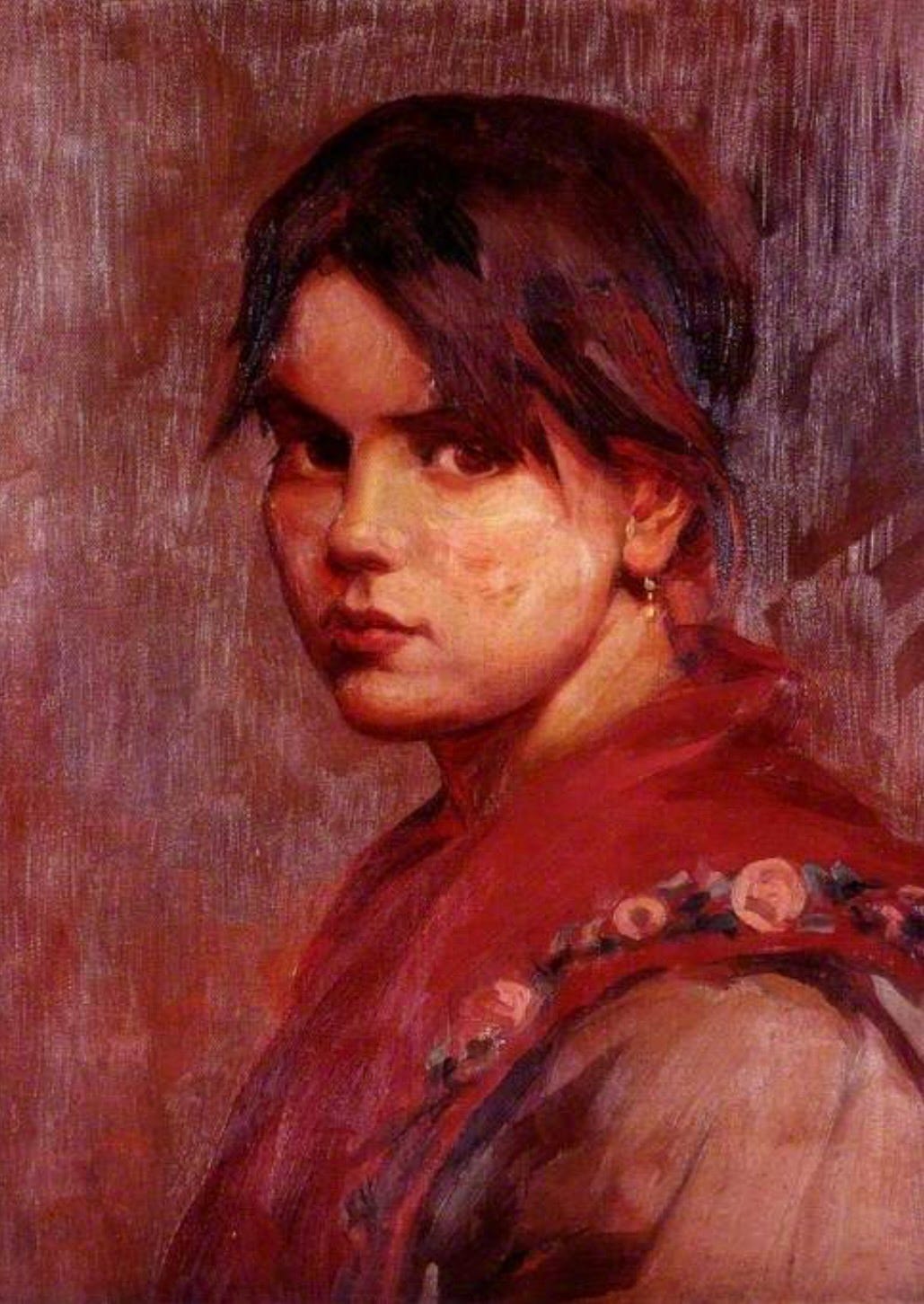
There are plenty of strong women depicted in the three works by Beryl Fowler (née Menzies) in the exhibition. Born in Newcastle in 1881, Beryl excelled at portraying confident and expressive female subjects. None illustrates this better than ‘Annunciate,’ in which the sitter, peering from behind her dark hair, meets the viewer’s gaze with a defiant expression that conveys strength, confidence, and a hint of challenge.
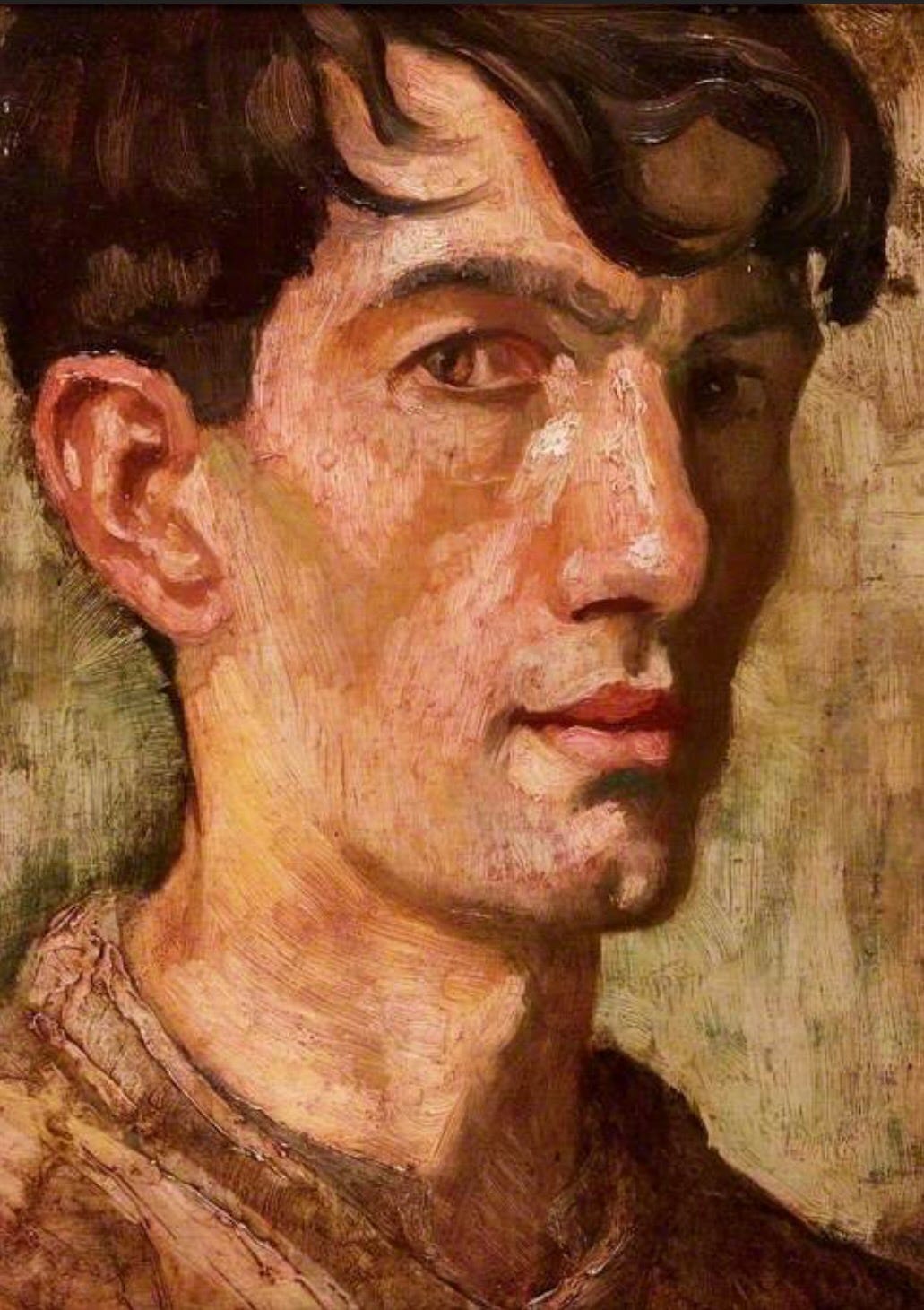
I wrote about northeast artist Norman Cornish, who is known for documenting the industrial landscape and working life of northeast England, a couple of years ago. Norman began working as a coal miner at 14 (as did my maternal grandfather) and retired 33 years later to pursue a full-time career as a professional artist. Although self-taught, many consider Norman the most celebrated of the ‘Pitman Painters.’ There are 29 known self-portraits by Norman, the most recent discovered in 2024 on the reverse of another painting. The one above is an early one, painted when he was around 30, and painting was a pastime for him.
Space does not allow me to share all the others in the exhibition, but suffice it to say that there are many more portraits by household names such as Frank Auerbach, Christina Robertson, Frederic Leighton, Harold Knight, and Arthur Hughes. Also represented are some of the leading, but lesser-known, artists from northeast England, such as Robert Jobling and Harry Thubron.
So, let’s move from the first room, which offered us a historical perspective on the portrait, to the second room, which presents the exhibition of the 46 shortlisted artists of the Herbert Smith Freehills Kramer Portrait Award, offering the portraits of today. Interestingly, the symbolism I mentioned earlier is still used in some contemporary works, indicating that the meanings of such symbols remain relevant to observers today.
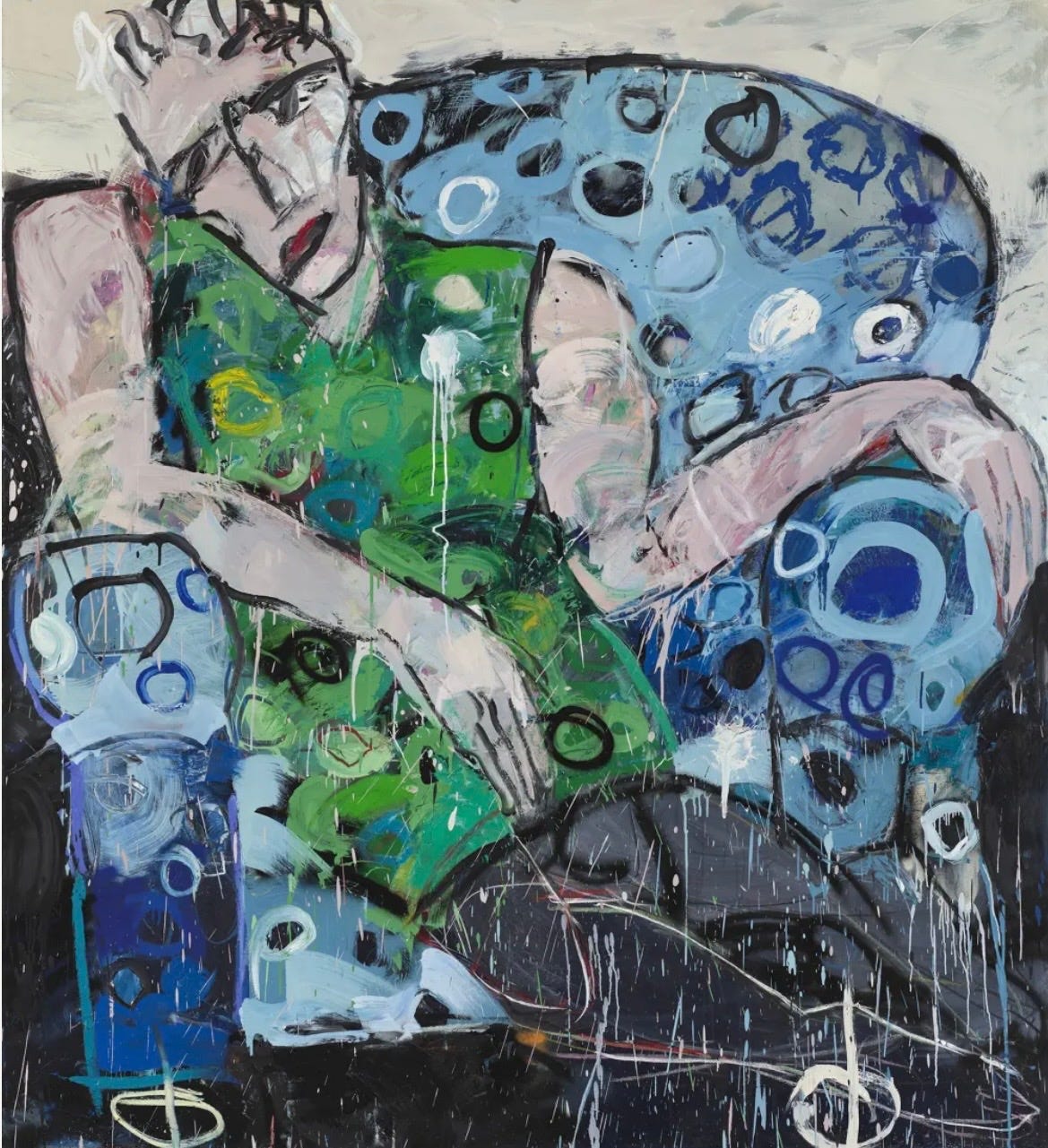
There are some sensational paintings in this second room, which can seem a bit overwhelming. Some pieces have a photo-realistic appeal, others have their subjects emerging from a maelstrom of paint, one of which is by the winner of the first prize, Moira Cameron, for her self-portrait, ‘A Life Lived’, of which Moira offers “The lines on my face, the subtle shadows, tell a story of time passing, of laughter and worry, of a life fully experienced”. By all accounts, this portrait grabbed the judges’ attention with its emphatic, non-naturalistic treatment of the figure, combined with the use of vivid colour and pattern. To them, this gives the piece an energy, vitality and humour that contrasts with the subject’s introspective pose and expression, creating a compelling tension that appealed to their eyes and their hearts.
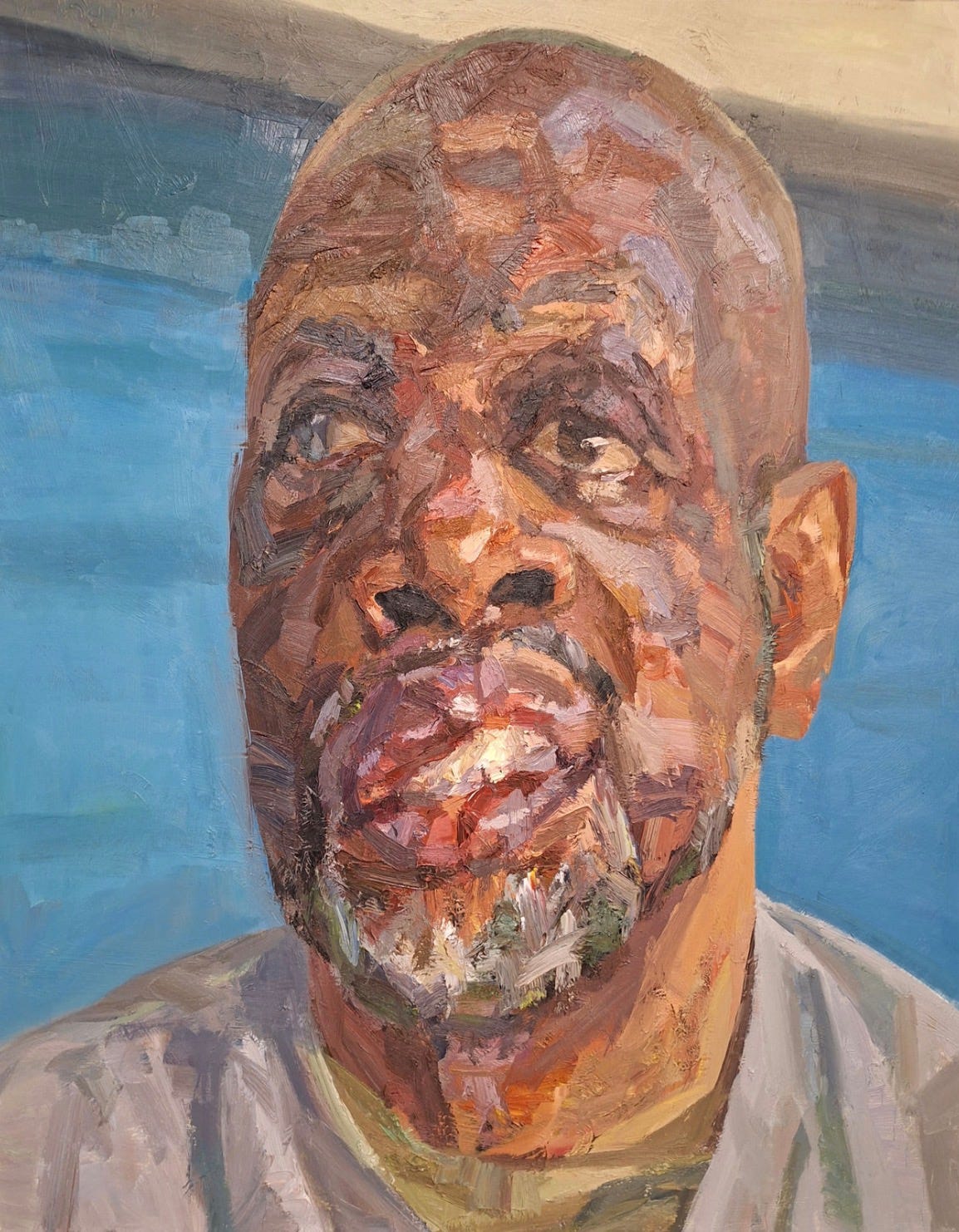
Tim Benson won second prize for ‘Cliff, Outreach Worker,’ whom he first painted in 2019 as part of a series highlighting inspirational London Haringey residents who serve the local community. Some years later, Cliff returned for this portrait, made from sketches and photographs taken in his office, with Tim offering, ‘Cliff has a facial difference, which is as much part of his story as his work in the community. Painting him has afforded me the opportunity to challenge historical notions of beauty in portraiture.” The judges were impressed by Tim’s expressive, sculptural use of paint to build a likeness and felt that the intense focus on Cliff’s face, the dignity bestowed on Cliff, and the celebration of difference created a powerful encounter.
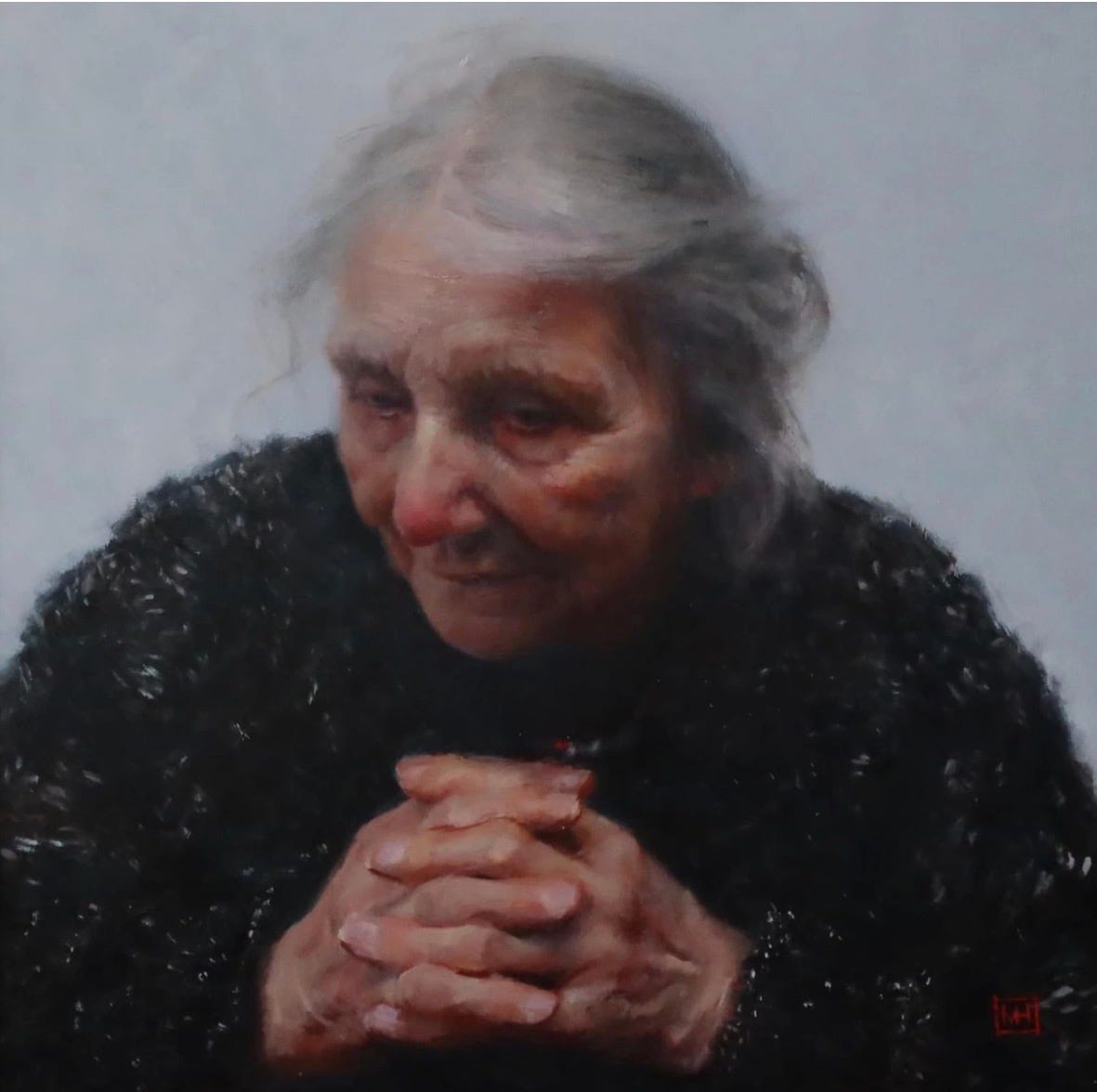
Third prize went to Martyn Harris for his painting ‘Memories’ of Gillian, someone whom Martyn came across when an artist in residence at the Art Yard Gallery. After building a friendship with Gillian, Martyn asked if she would sit for a portrait and though the image touches upon themes of loneliness, sorrow and the burden of time, both Martyn and Gillian found their collaboration uplifting. The sensitivity Martyn brought to painting Gillian, who appears lost in her own world in an instant of contemplation, moved the judges, who also admired Martyn’s exquisite rendering of textures, including Gillian’s woollen jumper and wisps of hair.
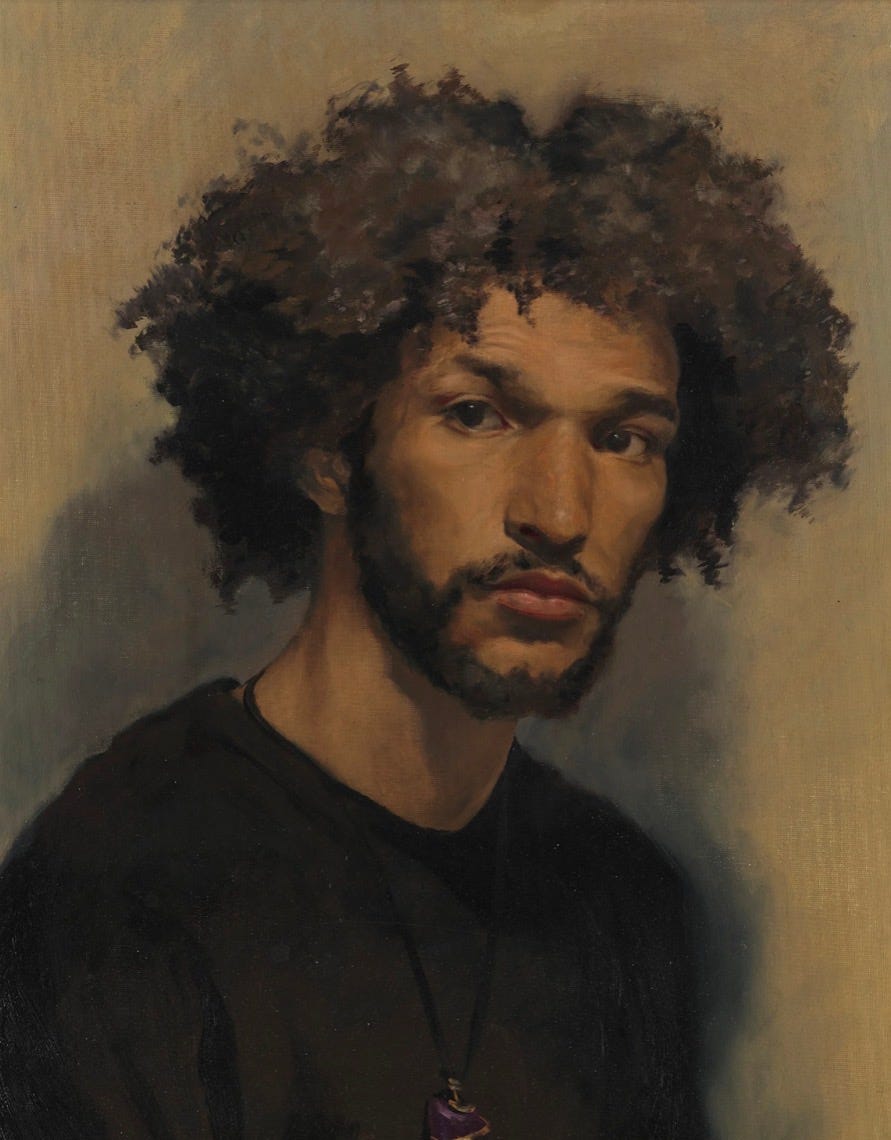
The Young Artist Award went to Michelle Liu for ‘Kofi’, who is an occasional life model at Big Turtle Studio in London, where Michelle, who recently relocated to the UK from her native USA, attends weekly drop-in sessions. As a young artist, Michelle says of the communal sittings, “My progress has come on in leaps and bounds since I have had a community of artists around me to share techniques, tips and critiques.” The judges thought this was a beautifully rendered, positive portrayal of Kofi, technically accomplished yet full of feeling and a moving calmness, with details such as a slightly raised eyebrow hinting at Kofi’s interior life.
I’ve just offered a hint here of the ‘Exploring Identity’ exhibition and what stands out for me is its emphasis on portraiture as storytelling rather than mere representation, with works that, together, suggest the multifaceted nature of personal identity and how it evolves over time, while also reflecting social history as much as individual character. It’s an exhibition that lives up to its title well.
‘Portraiture as storytelling’ reminds me of a self-portrait my son Karl did after reading The Fountainhead by Ayn Rand. Inspired by the obsessive architect Roark, he painted himself with that same driven intensity.
Really enjoyed this little tour of the exhibition, Harry. It's so impressive to see the quality of those contemporary portraits, and partiuclarly the one in the first section from Norman Cornish too (What a story about him begining his working life as a coal miner!)
But also have to mention that work by Sir John Lavery. Even in a photo on a screen, it is quite captivaqting so I can only imagine how it must be when stadning directly in front of it.